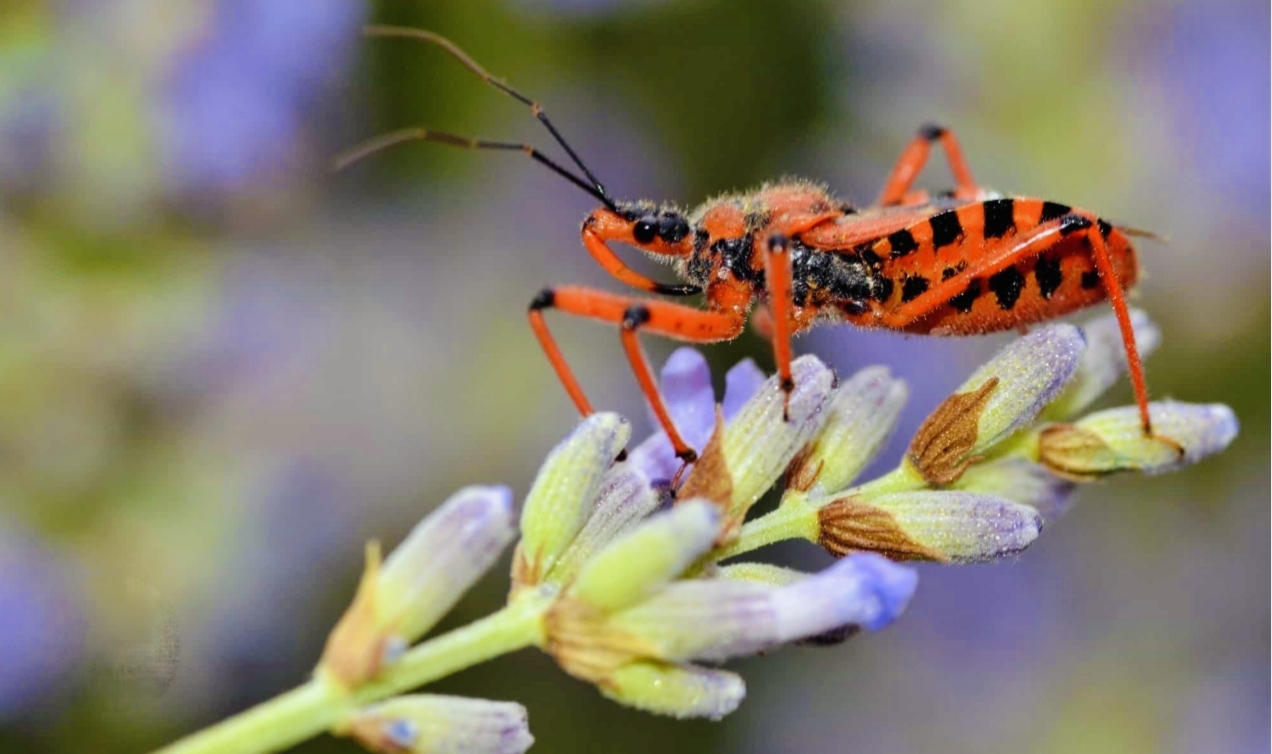
What if the best way to hunt wasn’t to chase, but to become perfectly still? Could pretending to be lifeless actually make a creature more dangerous, turning silence and patience into deadly weapons?
In a world where movement often means survival, what kind of predator thrives by doing absolutely nothing—waiting, unnoticed, until the perfect moment strikes?
At first glance, the assassin bug seems almost forgettable—a tiny, unmoving speck blending seamlessly into leaves, bark, or soil. It doesn’t chase, buzz, or draw attention.
Instead, it embraces stillness, appearing so lifeless that other insects simply ignore it.
But that quiet disguise is no accident—it’s strategy.
By staying perfectly motionless and camouflaged, the assassin bug turns invisibility into its greatest weapon. What looks like harmless inactivity is actually a calculated waiting game.
This unassuming insect lives by a simple rule: don’t be seen, and you won’t be suspected.
In its silence lies its strength, proving that sometimes, the best move isn’t action—it’s patience.
Silent Hunter
Science calls the act of “playing dead” thanatosis—a clever survival trick used to avoid predators.
The assassin bug borrows this idea but reshapes it into something far more strategic.
It doesn’t just freeze to stay safe. Its stillness doubles as a hunting tool, keeping it hidden in plain sight.
By remaining perfectly motionless, it avoids drawing attention.
To nearby insects, it looks like nothing more than part of the background.
This illusion allows unsuspecting prey—like flies and ants—to wander dangerously close without sensing any threat.
Then, in a split second, the calm breaks. The assassin bug lunges with precision the moment its target is within reach.
Using its sharp, needle-like mouthpart, it pierces the prey and injects digestive saliva—instantly paralyzing it and beginning the process of breaking it down from within.
Dead Still, Deadly Fast
At its core, the assassin bug’s hunting method is brutally efficient. It doesn’t rely on chasing or overpowering prey—it lets chemistry do the work.
When the moment arrives, it strikes with precision. Its needle-like mouthpart injects venom that rapidly begins to liquefy the victim from the inside.
Within seconds, the prey is immobilized. Escape becomes impossible as the internal tissues start breaking down almost instantly.
What follows is as efficient as it is unsettling. The assassin bug simply drinks the liquefied insides, turning its prey into a quick, nutrient-rich meal.
This entire process is remarkably fast. In just moments, what was once a living insect is reduced to little more than an empty shell.
Masters Of Disguise
Some assassin bugs take camouflage to another level. They actively decorate their bodies with dust, plant fragments, or even the remains of other insects.
This added layer of disguise enhances their illusion of stillness. To predators and prey alike, they appear even less like a living threat.
Blending seamlessly into their surroundings, they reinforce their strategy: remain unnoticed until the perfect moment.
Rather than depending on speed or brute strength, they rely on patience. Timing becomes their greatest advantage in a competitive natural world.
In the end, the assassin bug proves a simple truth—sometimes, survival isn’t about being the fastest or strongest, but about staying hidden and striking at exactly the right time.
So in a world that rewards speed and noise, could staying still and unseen actually be the smartest move?


Leave a Reply