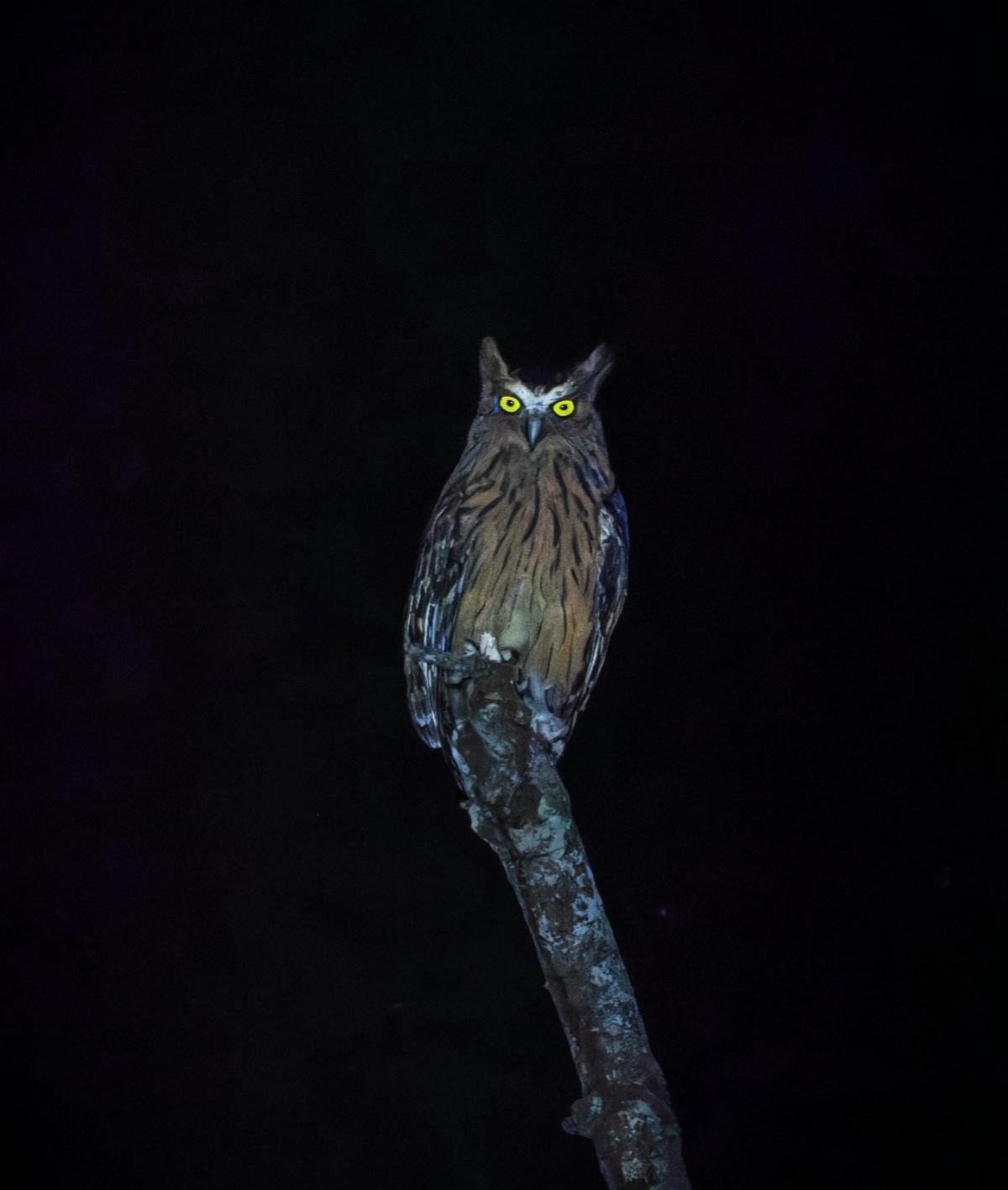
Have you ever spotted a pair of glowing eyes looking right at you? It’s kind of spooky, but also really cool.
Glowing eyes aren’t magic—it’s a smart natural trick. Many nocturnal animals have a special layer in their eyes that reflects light, helping them see better at night.
The Mystery Of Glowing Eyes
The sight of animals’ eyes shining in the dark can feel a little spooky—but it’s also deeply fascinating.
The secret lies in a special eye structure called the tapetum lucidum. This thin, reflective layer sits behind the retina and enhances vision in low light.
The name might sound complicated, but it simply means “bright layer” in Latin—and that’s exactly what it does.
It reflects light inside the eye, sending it back through the retina. This helps animals see clearly in the dark and is what causes their eyes to glow at night.
Nature’s Night Vision Trick
The tapetum lucidum is a reflective layer found in the eyes of many vertebrates, especially nocturnal animals.
It is commonly seen in creatures like cats, dogs, deer, raccoons, and alligators.
This layer sits behind the retina and acts like a natural mirror inside the eye.
When light enters the eye, instead of being fully absorbed, it hits this reflective surface.
The light is then bounced back through the retina, giving photoreceptors a second chance to capture it.
This improves vision in low-light conditions, helping animals see more clearly at night.
The Reason Animal Eyes Reflect Light
When external light sources like flashlights or car headlights shine into their eyes, the reflection becomes visible.
That glowing effect is simply light bouncing back out after hitting the reflective layer.
It is not light produced by the eye itself, but reflected light returning outward.
This adaptation gives nocturnal animals a strong advantage for moving and hunting in the dark.
Humans lack this reflective layer, which is why our eyes do not shine at night.
Night Vision Advantage
Animals that are active at night or in low light—like nocturnal and crepuscular species—depend on strong vision to survive in the dark.
The tapetum lucidum plays a key role by improving their ability to see when light is scarce.
It works by giving light a “second chance” to pass through the retina and be detected more effectively.
This enhanced vision helps animals spot prey, avoid predators, and move safely in dark environments.
In simple terms, it turns weak light into a useful advantage for survival at night.
Colors Behind The Night Glow
The glow in animal eyes can appear in different colors depending on the species.
Cats and dogs often show a greenish-yellow or bluish shine in the dark.

Deer and raccoons usually reflect a bright white or golden glow.
Alligators, on the other hand, can display a reddish or orange reflection, making them look especially eerie at night.
The tapetum lucidum boosts visual sensitivity, sometimes by up to 50%, helping animals see better in low light.
Interestingly, not all excellent night vision depends on this glowing layer.
For example, owls see extremely well in the dark but lack eyeshine, instead relying on large eyes packed with highly sensitive light-detecting cells.
Not Just A Creepy Glow
The red eyes sometimes seen in flash photographs are a common optical effect, but they are not the same as animal eyeshine.
This red appearance happens when a camera flash reflects off the blood-rich layer at the back of the human eye.
Unlike animals with reflective eye structures, humans lack the tapetum lucidum.
In animals, eyeshine is produced by light bouncing off this special layer, not blood.
While it may look strange or eerie, eyeshine serves an important purpose in nature.
It enhances night vision, helping many animals survive, hunt, and navigate in the dark.
Eyeshine is nature’s way of boosting vision in low light, not a mysterious glow. From cats to alligators, it is a survival advantage that helps animals see, hunt, and move safely when the world gets dark.
So, is that glowing eye in the dark something to fear, or just nature’s clever design?
DISCLAIMER: This article is derived from information available in the public domain.


Leave a Reply