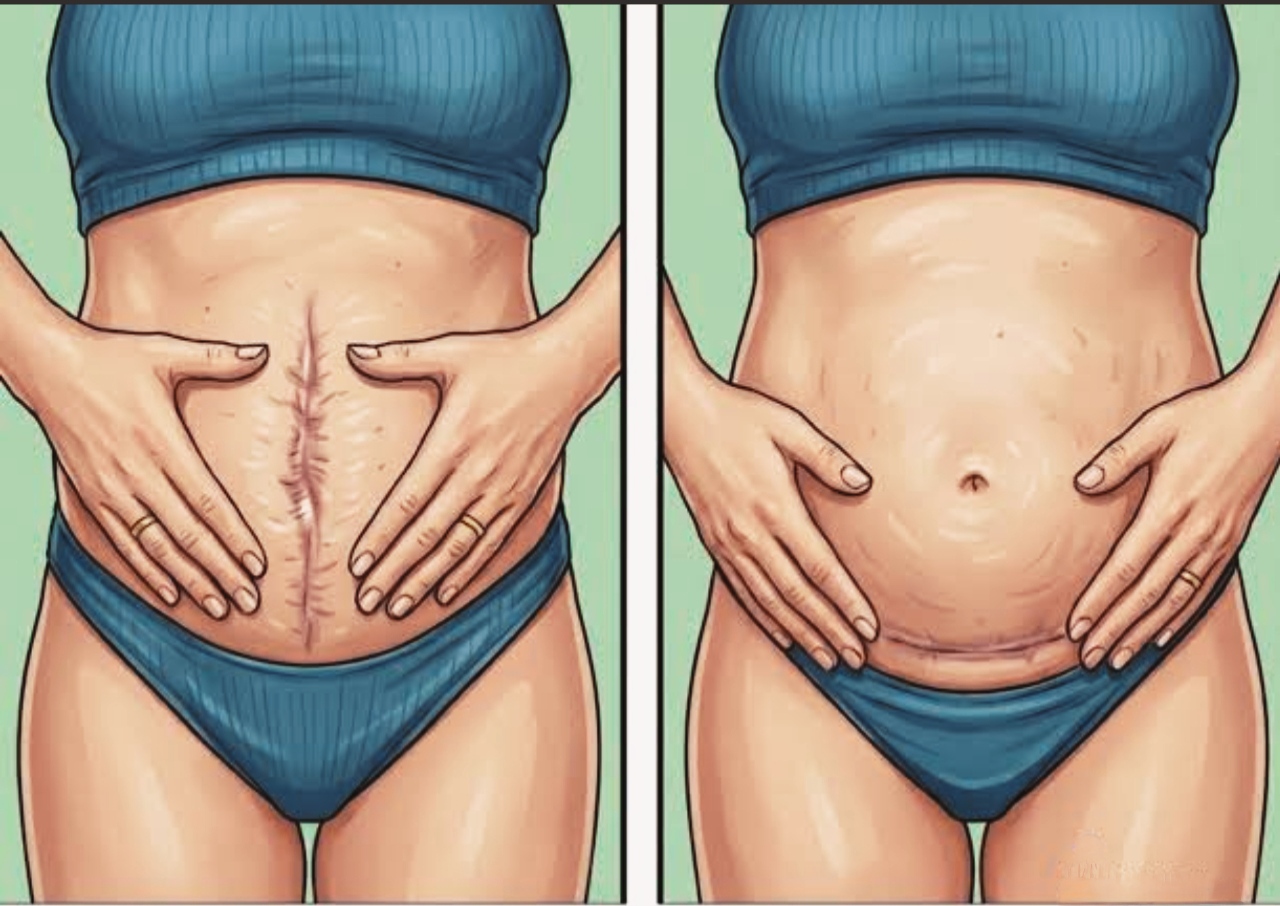
Why do some C-section scars run vertically instead of horizontally — and what does that reveal about the birth, the emergency, or the mother’s health?
Many people are familiar with the small horizontal “bikini cut”, but some women are left wondering why their scar is vertical instead.
A vertical C-section scar is more than just a surgical mark — it often tells the story of urgency, medical necessity, or life-saving decisions made in seconds.
Unlike the common horizontal incision that heals discreetly, vertical incisions are typically used in high-risk or emergency situations where speed and access are critical.
For many women, the appearance of a C-section scar can raise questions about what happened during delivery and why a different surgical approach was necessary.
Why Does The Scar Look This Way?
The shape of a C-section scar is determined primarily by medical necessity, not personal preference. Surgeons choose the incision type based on what is safest and most effective for both mother and baby during delivery.
The Common “Bikini Cut”
In most planned and low-risk C-sections, doctors use a low horizontal incision across the lower abdomen. Often called the “bikini cut,” this approach is preferred because it typically heals well and can be more discreet.
Safety Guides The Choice
While the horizontal incision is the standard in routine cases, the final decision depends on the medical situation at the time of surgery. The priority is always ensuring the safest possible delivery and recovery.
Why Most C-Section Scars Are Horizontal?
The shape of a C-section scar is determined by medical necessity rather than personal choice.
In most planned and low-risk deliveries, surgeons typically use a low horizontal incision across the lower abdomen, commonly known as the “bikini cut.”
This method is widely preferred because it generally heals better, results in a less visible scar, and supports a smoother recovery process.
The horizontal incision is considered the standard approach, but doctors may choose a different type of incision depending on the medical condition and urgency of the delivery to ensure the safest outcome for both mother and baby.
Vertical Cesarean Scar: Usually About Speed or Access
A vertical cesarean incision is often used during urgent or medically complex deliveries. Doctors may choose it when they need faster access to the baby or more operating space than a horizontal incision provides.
This type of incision can be associated with emergency situations, but it does not automatically mean the mother or baby was in immediate danger.
In many cases, it is simply the safest and quickest surgical option for the circumstances.
The decision depends on factors such as the baby’s position, prior surgeries, premature delivery, or other complications. The scar reflects the medical situation at the time, not necessarily the severity of the outcome.
Strength Returns Step By Step
Recovery after a vertical C-section can feel slightly tougher in the beginning. The incision may be more painful initially and can take a bit longer to heal compared to a horizontal scar.
There is also a slightly higher chance of issues like hernia formation, raised scarring, or delayed return of core strength because of the way the muscles and tissues are affected during surgery.
With proper care, most women recover well after a vertical C-section. Guided rehabilitation, gentle movement, and physiotherapy-supported exercises can play a major role in improving healing, rebuilding strength, and supporting overall recovery.
Long-term care becomes especially important after a vertical C-section, particularly when planning future pregnancies. Because of the way the uterus heals, doctors usually recommend repeat C-sections for future deliveries.
This is mainly due to the higher risk of the uterine scar reopening during labor compared to a horizontal incision. Careful monitoring and delivery planning help keep future pregnancies safer.
Small Precautions Matter
The weeks after a vertical C-section are important for proper healing. Avoid heavy lifting for at least 6–8 weeks to reduce strain on the incision and support recovery.
It’s also important to monitor the scar closely. Redness, swelling, bulging, or unusual pain should be checked by a doctor early.
For future pregnancies, always inform your gynecologist about the vertical scar as early as possible. Early planning helps ensure safer monitoring and delivery decisions.
A vertical C-section scar may need extra care and monitoring, but most women recover well and can safely plan future pregnancies with proper medical guidance.
A vertical C-section scar may require extra care and monitoring, but most women recover well and can safely plan future pregnancies with proper medical guidance.
A vertical C-section scar is mainly chosen for speed, safety, and better surgical access during complicated or emergency deliveries.
Could your vertical scar reflect the life-saving decisions made during your delivery?
DISCLAIMER: This article is derived from information available in the public domain.It’s always a good idea to check your doctor before beginning any new routine.


Leave a Reply