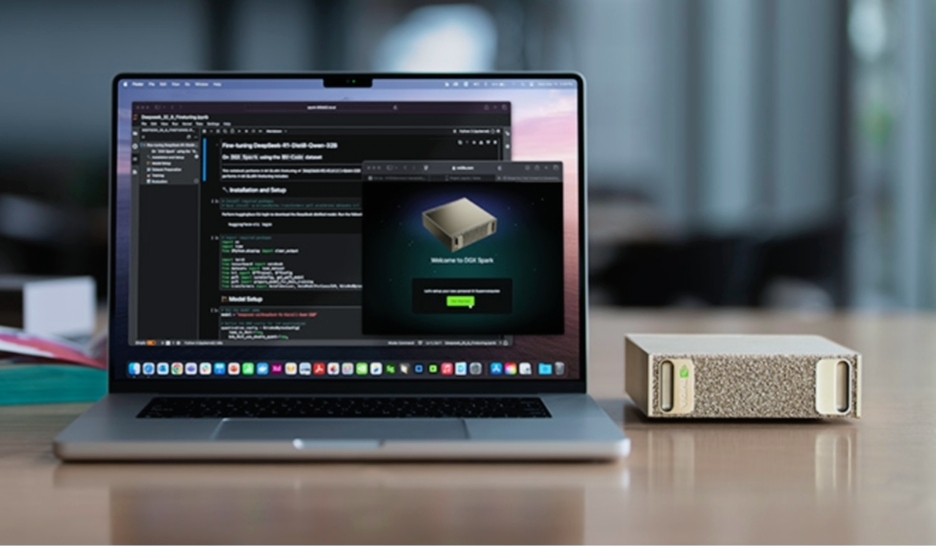
Nvidia is set to launch the DGX Spark ‘Personal AI Supercomputer’ on October 15.
This compact device is made to sit on your desktop, allowing users to develop advanced Artificial Intelligence (AI) models.
Starting this Wednesday, you can buy the DGX Spark.
Nvidia dubs it “the world’s smallest AI supercomputer”.
Nvidia’s CEO, Jensen Huang, mentioned that “having an AI supercomputer available for every data scientist, AI researcher, and student allows them to participate in and influence the AI era”.
Huang first introduced Spark, which was previously called Digits, earlier this year.
Spark delivers performance that used to be possible only with expensive, high energy data centers.
Nvidia has mentioned that third party manufacturers can make their own versions of Spark, we can expect to see some similar devices hitting the market.
Nvidia has announced that Acer, Asus, Dell, Gigabyte, HP, Lenovo, and MSI will all be launching their own tailored versions of Spark.
Spark boasts up to 4TB of SSD storage, 128GB of unified memory, and features Nvidia’s GB10 Grace Blackwell Superchip.
It can manage AI models with as many as 200 billion parameters and deliver a petaflop of AI performance, which is a million billion calculations every second.
Plus, it’s compact, fits perfectly on a desk, and can be plugged into a standard outlet.
People can find it online at nvidia.com and from select partners and retailers throughout the United States.
Nvidia has revealed that the DGX Spark will cost $3,999 (about Rs 3,55,106).
Most PC manufacturers have their own customized supercomputer models, and the Acer Veriton GN100 is a similar option available for the same price of $3,999.
DISCLAIMER: The specifications and features listed are derived from official announcements and might differ based on the region or model. Be sure to check the details on the official website or with authorized sellers before you buy.
- Rising Temperatures, Rising Tempers? The Surprising Link Between Heat And Aggression

- India’s Lost Dragonfly Returns After 110 Years

- Snapchat Introduces Safer Story Sharing For Under-16 Users

- Google Launches Gemini 3.5 Live Translate

- The New Dating Trend Everyone’s Talking About: Puffer-Fishing

- Tea, Coffee, Juice: The Worst Empty Stomach Mistakes

- Instagram Introduces Profile Grid Customization

- Skywatchers Alert: Jupiter And Venus Set For A Rare Close Encounter Tonight

- Chrome Just Downloaded a 4GB AI Model? Here’s How to Delete It

- Why Does Real Love Feel Different Than We Expect?

- The 30-Minute Parenting Secret Every Child Needs

- Remote Robotics: Control Robotic Arms From Your Smartphone

- Mumbai’s Pod Taxis: Will BKC Benefit?

- Beyond The Missing Period: Understanding MRKH Syndrome

- Why Calling Every Stomach Problem ‘Gas’ Can Be Risky?

- Poke: Apple’s First AI Agent Debuts

- AC Drying Out Your Skin? Try This Simple Fix

- Want More Fireflies? Transform Your Garden Today

- Spotify Launches Podcast Clips For Instant Highlight Saving

- The Hidden Reason Summer Causes More Headaches

- Early Iron Deficiency Symptoms You Shouldn’t Ignore

- Meta Introduces Premium ‘Plus’ Tier For Instagram, Facebook And WhatsApp

- WhatsApp Launches Channel Status For 24-Hour Admin Updates

- 5 Powerful Signs You’re With The Right Person

- Social Media: The New Smoking For Children?

- Dewy, Glossy, Sweaty: The Viral Makeup Trend Everyone’s Trying

- Luna Launches Smart AI Band For Real-Time Daily Planning

- Meta Launches New ‘Forum’ App

- Why Is Your C-Section Scar Vertical?

- Red vs Orange Heat Alerts: Which One Puts Your Body At Greater Risk?

- Does AC Sleep Weaken Your Immunity? – Myth or Fact?

- The Rise Of Nonnamaxxing

- How To Clean Mushrooms Without Turning Them Soggy?

- How Hot Nights Quietly Harm Your Sleep And Heart?

- Indian Content Creators Can Win a Free Nepal Trip — Here’s How To Apply

- Gemini Omni Flash Brings Multimodal AI Video Creation To Google

- Essential Oil Diffusers: Healthy Trend or Hidden Hazard?

- Gmail Users Alert: Your Free 15 GB Storage Could Disappear

- YouTube Introduces Likeness Detection For 18+ Users

- AI vs Human Language: Is Learning Still Worth It?

- OpenAI Unveils ChatGPT Finance Tools With Direct Bank Integration

- The Ageing Risk Of Sleeping Too Much Or Too Little

- Fitness or Future Pain? The Truth About Joint-Damaging Workouts

- Salt Water Trend: What You Need To Know First?

- X Launches History Tab For Likes, Bookmarks And Videos

- Stay Chill: Smart Gadgets For Summer

- Instagram Launches Instant For Disappearing Photos

- ChatGPT App Now Supports Codex Coding Tool

- Best Smart Devices For Senior Citizens

- Why Did Humans Use To Eat Soil, And Why Do Some Still Do?

- How Your Body Responds To Sleep Deprivation


Leave a Reply