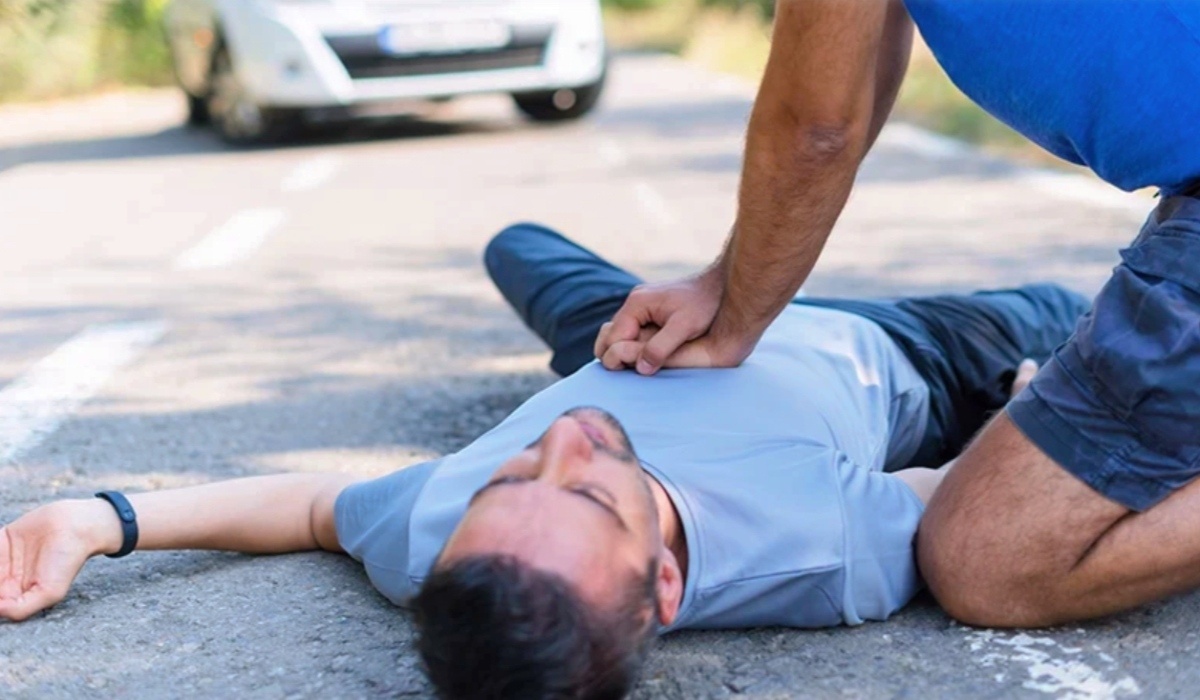
CPR (Cardiopulmonary Resuscitation) is an emergency technique used when a person’s heart stops beating or they stop breathing. It combines chest compressions and rescue breaths to keep blood and oxygen flowing to the brain and body until medical help arrives.
This technique can assist in manually circulating blood that still has some oxygen to critical organs like the brain, until medical help arrives.
Without CPR, brain damage can start within 3 to 4 minutes due to a lack of oxygen, and the chances of survival decrease by 7-10% for every minute that passes without help. Even people who aren’t trained can perform ‘hands-only’ compressions effectively, which can double or triple the chances of survival in cases of cardiac arrest outside of a hospital.
If someone is unconscious or unresponsive, not breathing normally (or just gasping), and has no pulse, you should begin CPR immediately.
First, make sure the area is safe, tap their shoulder, and call for help while checking their breathing for 5-10 seconds.
Call emergency services right away (like 108 in India or 911 in other places) or ask someone nearby to do it if you can. If you’re on your own, you can put the phone on speaker while you start CPR.
If you have someone with you, send them to grab an AED (automated external defibrillator), which checks the heart rhythm and can deliver shocks if necessary.
3 Types Of CPR
1)One for adults
2)One for kids
3)One for infants(For babies under 1 year)
Adult CPR Steps
1)First, lay the person down on a solid, flat surface.
2)Kneel beside their chest.
3)Put the heel of one hand in the center of their chest (lower sternum, between the nipples).
4)Place your other hand on top, interlocking your fingers; keep your arms straight and your shoulders over your hands.
5)Push hard and fast – 2-2.4 inches (5-6 cm) deep, at a rate of 100-120 beats per minute.
6)Make sure to let the chest fully rise between compressions.
7)Do 30 compressions (which should take about 18-24 seconds).
Another useful step is to give rescue breaths, but only if you’re trained to do so.
Rescue Breaths
1)Slightly tilt the head back and lift the chin to open the airway.
2)Pinch the nose shut, seal your lips over theirs, and give 2 breaths (1 second each), watching for the chest to rise.
3)Each breath should take 1 second, just enough to make the chest visibly rise; avoid over-inflating.
4)Continue with 30:2 cycles until help arrives, the AED is ready, or the person starts to respond.
Child CPR Steps
1)Use one hand for compressions (or two hands for bigger kids).
2)Make sure the depth is 2 inches (about one-third of the chest depth).
3)Position your hands the same as before – right in the center of the chest, just below the nipples.
4)Do chest compressions at a speed of 100–120 per minute, giving 30 compressions followed by 2 breaths, and repeat the cycle.
For rescue breaths, cover the mouth and nose with your mouth and give gentle puffs to prevent air from going into the stomach.
5)If you’re by yourself, do CPR for 2 minutes before calling for help.
Infant CPR Steps
1)Use two fingers (index and middle) on the breastbone, just below the nipple line for compressions.
2)The depth should be 1.5 inches (about one-third of the chest).
3)Give 30 chest compressions at a speed of 100–120 per minute, then 2 breaths, while supporting the head and neck, and repeat.
4)Rescue breaths should be soft puffs.
Hands-only CPR option
If you’re not trained or feel unsure about giving breaths, just do continuous compressions (100-120 per minute) without breaths — it’s still very effective for adults.
People should know CPR because it can save lives by keeping blood and oxygen flowing until medical help arrives.
DISCLAIMER: This article is derived from information available in the public domain.It’s always a good idea to check your doctor before beginning any new routine.


Leave a Reply