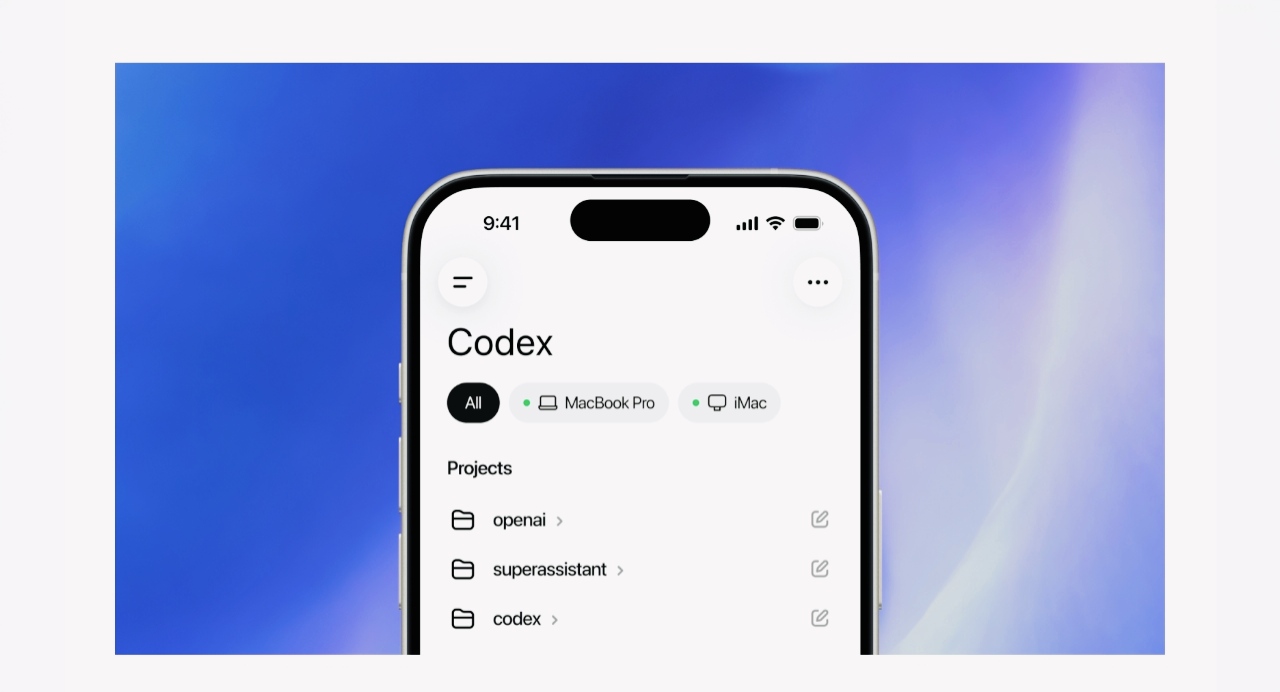
What if your next coding assistant fits right in your pocket?
OpenAI has officially brought Codex to the ChatGPT mobile app, allowing developers to generate, edit, and understand code directly from their phones.
The move pushes AI-powered coding beyond desktops, making software development more accessible, portable, and instant than ever before.
OpenAI announced on Thursday, May 14, 2026, that its AI-driven coding assistant, Codex, is now available on smartphones through the ChatGPT app, enabling developers to monitor and manage their coding tasks from anywhere.
“This goes beyond simply controlling a single task remotely or sending new tasks to your computer”, the company stated in its announcement about the update. “With your phone, you can navigate through all your threads, review outputs, approve commands, switch between models, or initiate something new”.
ChatGPT App Turns Into A Coding Hub
OpenAI has introduced Codex on the ChatGPT mobile app for both iOS and Android users in preview mode.
The update allows developers to access live coding environments directly from their smartphones, making AI-assisted programming more flexible and portable.
Users can review outputs, approve commands, switch between AI models, and manage multiple coding sessions seamlessly within the app.
The mobile integration brings desktop-level coding assistance into a compact, on-the-go experience.
With this rollout, OpenAI is expanding the reach of AI-powered software development beyond traditional workstations, enabling developers to start and manage coding tasks anytime and anywhere.
AI Coding Gets Smarter
OpenAI continues to expand its vision for agentic AI coding tools capable of handling development tasks with minimal human intervention.
The latest updates reflect the company’s push toward more autonomous and seamless coding experiences.
Last month, OpenAI introduced background execution support for on desktop, enabling coding workflows to continue running independently even when users switch to other tasks.
The feature helps developers maintain productivity without constant supervision.
Earlier this month, OpenAI also launched a Chrome extension that allows Codex to operate directly inside live browser sessions.
These updates further strengthen Codex as a more integrated and hands-free AI development assistant, expanding its ability to support developers across desktop, browser, and mobile environments.
AI Coding Race Heats Up
The rapid stream of updates highlights the growing competition in the AI coding assistant market, particularly between and .Earlier this year, Anthropic introduced Remote Control for its platform, allowing developers to remotely supervise and manage coding tasks handled by the AI assistant.
Earlier this year, Anthropic introduced Remote Control for its platform, allowing developers to remotely supervise and manage coding tasks handled by the AI assistant.Over the past year, AI-assisted coding has emerged as one of the fastest-growing segments in generative AI, with companies racing to build tools that can write, debug, and streamline software development.
Over the past year, AI-assisted coding has emerged as one of the fastest-growing segments in generative AI, with companies racing to build tools that can write, debug, and streamline software development.
Claude Code has gained strong popularity among developers and enterprises, while continues expanding across desktop, web, and mobile platforms.
The growing rivalry reflects the industry’s broader push toward more autonomous and accessible AI-powered software development tools.


Leave a Reply