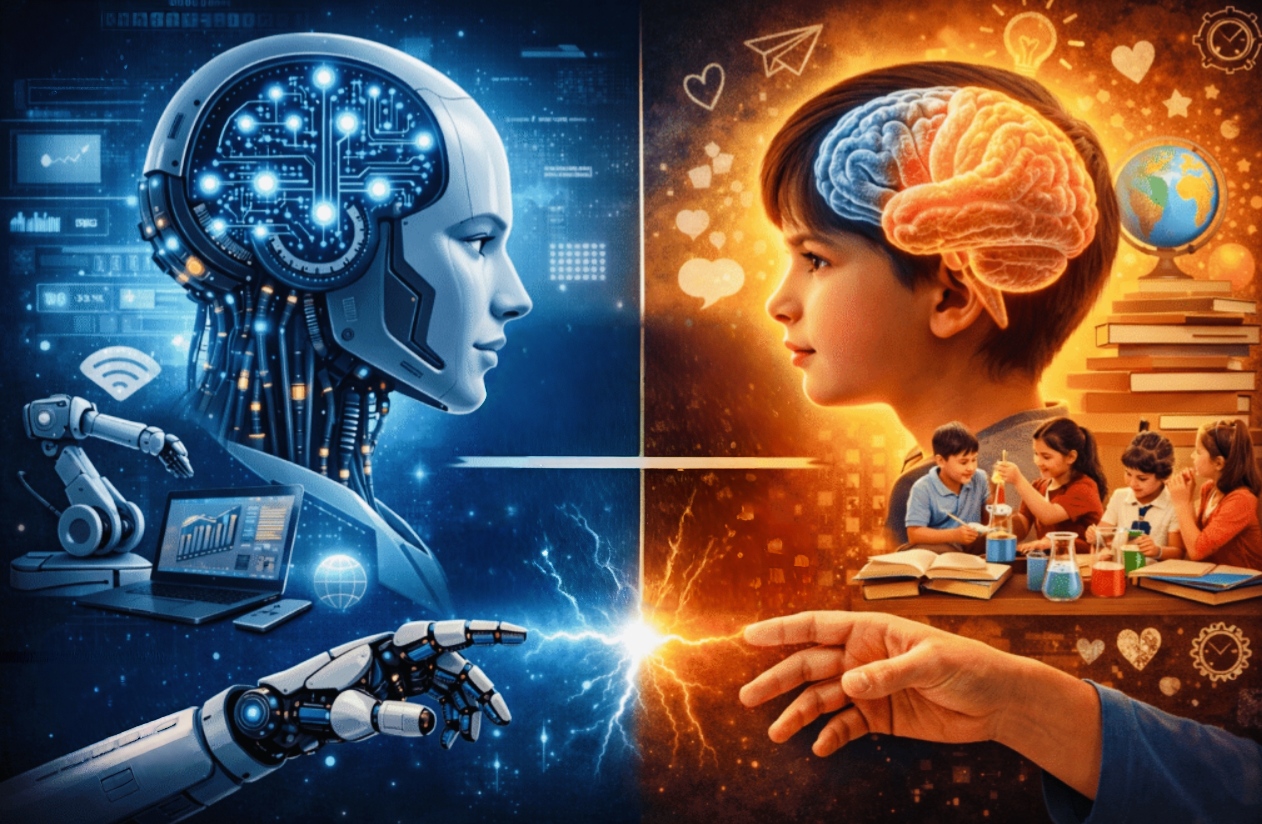
If AI can speak every language for you, what’s the point of learning one yourself?
As AI becomes capable of instantly translating and speaking almost every language, many people wonder whether learning a new language is still necessary.
Yet language is more than just words — it is culture, identity, and human connection. In the age of AI, the value of learning languages may matter more than ever.
AI-powered real-time translation is no longer futuristic; it is already transforming everyday communication.
From live speech translation in video calls to auto-dubbing on TikTok, language barriers are disappearing in real time.
What once felt like sci-fi is now built into the apps we use daily, making global conversations faster, smoother, and more accessible than ever.
Language is more than words — it carries culture, emotion, humor, trust, and human connection.
AI can translate instantly, yet learning a language still unlocks experiences no machine can fully replicate.
AI vs Language Learning
Modern AI tools from OpenAI, Meta, Google, and others now deliver fast, accurate translations across countless languages, making communication easier than ever.
This brings up an important question. If machines can translate faster and more accurately than people, is it still worth spending years learning a new language?
People have always used tools to make tasks easier—writing helped memory, calculators made math simpler, and AI is doing the same today.
AI can strengthen learning, improve accessibility, and help people connect more efficiently instead of completely replacing human abilities.
Even with powerful translation tools, learning a language offers cultural understanding, emotional connection, and deeper communication that technology cannot fully replicate.
There’s an important difference between using tools to improve skills and using them to avoid learning entirely, especially when language also shapes thinking and cultural connection.
Why Does Struggle Improve Learning?
Effort plays a major role in how people truly learn and remember information.
Psychologists call this “desirable difficulties” — challenges that feel hard at first but improve long-term understanding and memory.
Working through grammar, vocabulary, and meaning strengthens memory, focus, and flexible thinking, leading to deeper learning than passive exposure.
How Languages Strengthen the Brain?
Keeping the brain mentally active helps maintain strong cognitive function as people age.
Managing multiple languages strengthens focus, adaptability, and the ability to handle complex mental tasks.
Relying only on translation tools reduces the deep mental effort that helps the brain grow and stay sharp.
Languages vs AI Translation
Using multiple languages regularly acts like ongoing brain training, building subtle benefits across a lifetime.
AI translation offers fast, accessible, and often reliable results for everyday communication needs.
However, it mainly relies on patterns, not true understanding, and can miss cultural nuance, humor, tone, and emotion—especially in less-represented languages
Beyond Translation
Translation is not the same as real participation in a language and its culture.
Learning a language helps you understand how people think, their values, and how context and history shape meaning.
This kind of cultural insight grows through real interaction and cannot be fully replaced by on-demand translation systems.
AI in Language Learning
AI is reshaping language learning by personalizing lessons, removing barriers, and providing instant feedback at scale.
Despite its strengths, AI cannot replicate the mental effort and cultural immersion that comes with truly learning a language.
That effort builds deeper understanding, shaping how we see others’ perspectives and express our own ideas—something technology alone cannot replace.
Here’s the corrected version:
AI can translate quickly and accurately, but it mainly handles words, not lived meaning. Human language learning builds an understanding of culture, context, emotion, and thought patterns that go beyond translation. While AI makes communication easier, it cannot replace the depth gained through effortful learning and real interaction.
So, will we still learn languages in an AI-powered world?


Leave a Reply