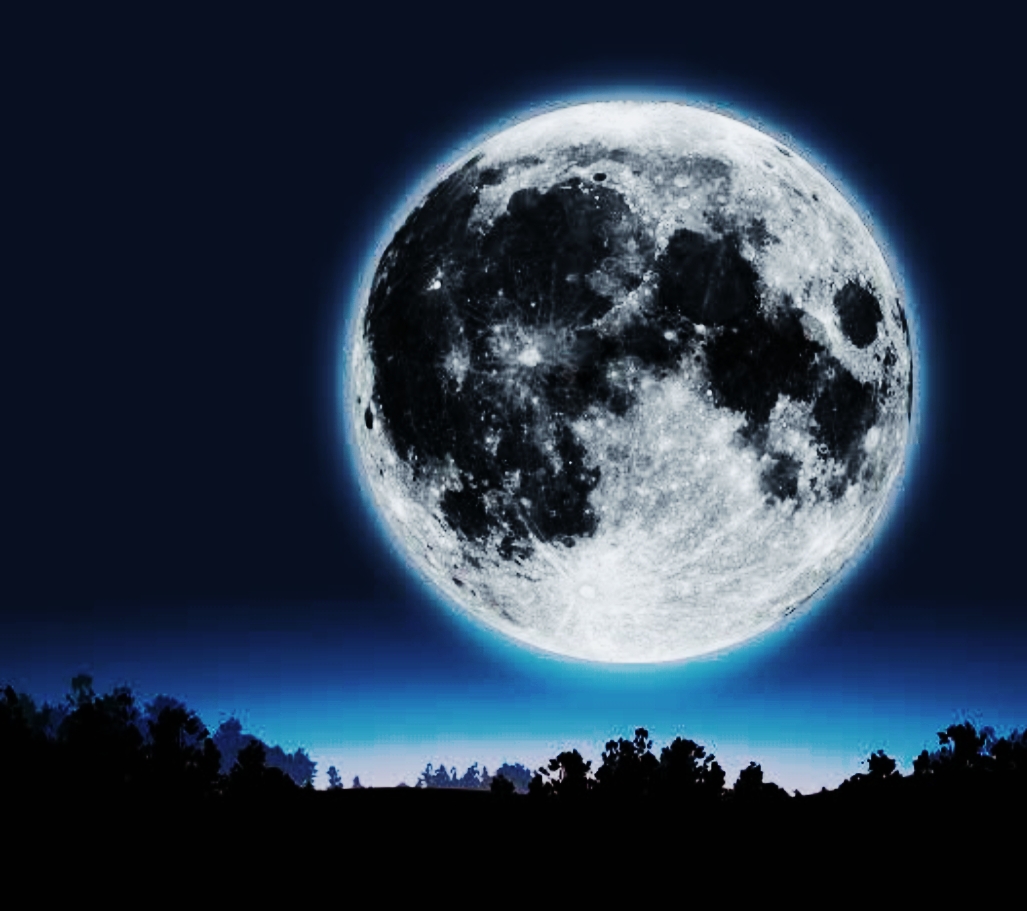
Because one side of the moon is always facing the earth and the other side is always facing away, the moon is tidally locked. Scientists were shocked to discover that the moon’s far side appeared significantly different from its near side when they first saw it.

An extensive study using data from NASA’s Gravity Recovery and Interior Laboratory (GRAIL) mission is now offering new insights into why the moon’s two hemispheres appear so different. The findings, which were published in the journal Nature, provide insight into the moon’s internal structure and reveal notable differences between its nearside and farside that are closely related to its volcanic past and gravitational interactions with Earth. This remarkable asymmetry has baffled scientists for decades.
The Purpose Of GRAIL Mission
Launched in 2011, NASA’s GRAIL project used two robotic spacecraft, Ebb and Flow, to orbit the moon and provide the most comprehensive gravity map of the moon’s surface to date. Measuring changes in the moon’s gravitational field was the main objective of the mission, as this would provide important information about its interior structure and geological past.
This was accomplished by the GRAIL mission, which measured the distance between the two spacecraft while they orbited the moon. Small variations in this distance, brought on by differences in the moon’s gravitational attraction, revealed information about the moon’s underlying anomalies, crust thickness, and internal composition. This method has been essential for comprehending the forces that molded the moon’s opposing hemispheres.
Why Is The Moon’s Surface So Different On Both Sides
There are three reasons,
1)Tidal deformation and gravitational asymmetry
2)Volcanic activity and heat distribution
3)Crustal thickness and surface composition

Tidal Deformation And Gravitational Asymmetry
A significant discovery of the GRAIL mission is the irregularity of the moon’s interior. Researchers found tidal deformation, or the modest bending of the lunar nearside relative to the farside during the moon’s elliptical orbit around the Earth. Because Earth’s gravitational force is stronger on the side facing our planet, this variation in flexibility is mostly caused by it.
According to Ryan Park, main author of the study and supervisor of the Solar System Dynamics Group at NASA’s Jet Propulsion Laboratory, “Our study demonstrates that the moon’s interior is not uniform: the nearside, which faces Earth, is warmer and more geologically active deep down than the farside”.
This greater flexibility implies a very different internal structure on the lunar nearside, which probably contributed to its unique surface features.
Volcanic Activity And Heat Distribution
Additionally, the study supported a long-held hypothesis that the nearside of the moon was formerly more volcanically active than the farside. Strong volcanic activity on the nearside created enormous plains of basaltic rock billions of years ago, which are still discernible today as the dark areas referred to as “mare”. On the other hand, the older, lighter crust that covers the farside has mostly escaped the effects of massive volcanic activity.
The study found that this volcanic activity concentrated radioactive, heat-producing materials like titanium and thorium in the nearside mantle, causing a notable temperature differential between the two hemispheres. The lunar geology has been sculpted over billions of years by a long-term thermal imbalance caused by the nearside mantle, which is thought to be 180–360 degrees Fahrenheit (100–200 degrees Celsius) hotter than the farside mantle.
Crustal Thickness And Surface Composition
The moon’s asymmetry is also largely caused by the disparity in crustal thickness between its two sides. The nearside crust is much thinner than the farside crust, according to the GRAIL data, which made it easier for magma from the moon’s interior to reach the surface in the past and cause massive lava flows.
Since the farside is still rough and highly cratered, the nearside has wide, flat plains, which is probably explained by this difference in crustal thickness. Further exacerbating the thermal imbalance between the two hemispheres, the thinner nearside crust also encouraged the buildup of radioactive, heat-producing materials.
Consequences For Lunar Exploration And Upcoming Missions
Future lunar exploration will be significantly impacted by the GRAIL mission’s results. The success of upcoming crewed missions to the moon and beyond will depend on the development of precise lunar positioning, navigation, and timing (PNT) systems, which need an understanding of the interior structure of the moon.
Additionally, other celestial bodies like Jupiter’s moon Ganymede and Saturn’s moon Enceladus—both of which are thought to be viable possibilities in the hunt for extraterrestrial life—could benefit from the gravity field mapping techniques employed in this work.
Linking The Stability Of Earth To Lunar Discoveries
The moon is important for regulating Earth’s rotation and creating ocean tides, which have influenced the evolution of life on our planet, in addition to its scientific value. Our knowledge of our nearest neighbor is enhanced by an understanding of the moon’s internal dynamics and geological past, which also sheds light on the early solar system and the forces that shaped it.
- The Future Of Air Travel: Why The 100ml Liquid Limit May Soon Disappear
- Rising Temperatures, Rising Tempers? The Surprising Link Between Heat And Aggression
- India’s Lost Dragonfly Returns After 110 Years
- Snapchat Introduces Safer Story Sharing For Under-16 Users
- Google Launches Gemini 3.5 Live Translate
- The New Dating Trend Everyone’s Talking About: Puffer-Fishing
- Tea, Coffee, Juice: The Worst Empty Stomach Mistakes
- Instagram Introduces Profile Grid Customization
- Skywatchers Alert: Jupiter And Venus Set For A Rare Close Encounter Tonight
- Chrome Just Downloaded a 4GB AI Model? Here’s How to Delete It
- Why Does Real Love Feel Different Than We Expect?


Leave a Reply