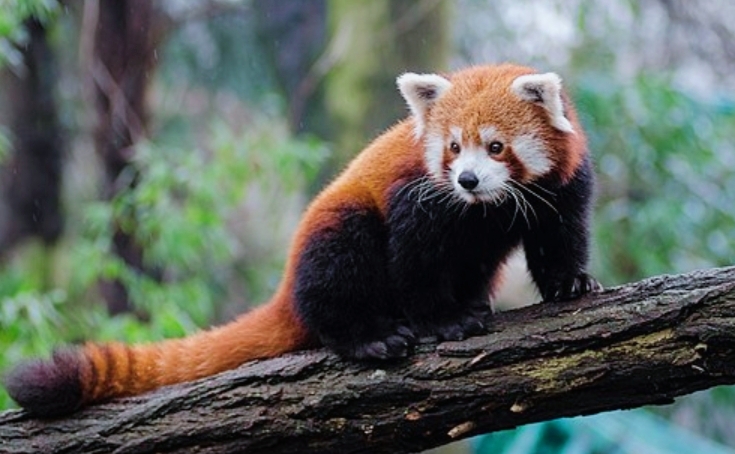
On June 15, parents Lucky-II and Mirak welcomed two cubs, but the park officials shared the exciting news about this “significant milestone” on Friday, August 1, 2025. This is the first litter for the pair.
The arrival of red panda cubs after 7 year hiatus has revitalized a conservation program at the Himalayan Zoological Park close to Gangtok, the capital of Sikkim.
“This birth is particularly uplifting since it follows a tough seven year stretch for the Red Panda Conservation Programme, which started in 1997. During these seven years, there were no successful births because of issues like two outbreaks of canine distemper that almost wiped out the captive red panda population”, said the park’s Director, Sangay Gyatso.
Mr. Gyatso mentioned that the breeding program for the park’s red pandas (Ailurus fulgens) started with Preeti, a female from Rotterdam Zoo in the Netherlands, and Jugal from the Padmaja Naidu Himalayan Zoological Park in Darjeeling.
“Their successful breeding established a strong genetic lineage. In 2005, the program was enhanced by adding a pair from the wild, Lucky and Ram, which helped to broaden and diversify the genetic pool”, he stated.
Rare Male Activity
Red pandas usually mate during the winter months from November to January. After a gestation period of roughly five months, females give birth between June and August in cozy, concealed nests.
The park officials mentioned that Mirak was seen helping with nest building alongside Lucky-II, which is a rare case of a male taking part in such an activity. Typically, male red pandas do not participate in raising cubs.
The cubs will be kept out of the public eye until they’re old enough to be seen.
Situated in Bulbuley, just 3 km away from Gangtok, the Himalayan Zoological Park spans 205 hectares and sits at an average height of 1,780 metres. Besides the red panda, you’ll find the snow leopard, Himalayan palm civet, monal (a type of pheasant), Himalayan black bear, and the crimson-horned pheasant in the park.
“These new cubs will remain with their mother for more than a year, growing to full size by 12 months and becoming sexually mature by 18 months. Their health and compatibility will be evaluated as part of future breeding plans”, Mr. Gyatso mentioned.
“The arrival of these cubs is a symbol of hope for the conservation of the endangered species in Sikkim and showcases the resilience of the program and its committed team”, he added.
- New Zealand Legend Kane Williamson Announces Retirement

- FIFA World Cup 2026: How Fans Can Watch Matches For Free

- YouTube Relaunches Private Chats With Age Verification

- The Future Of Air Travel: Why The 100ml Liquid Limit May Soon Disappear

- Rising Temperatures, Rising Tempers? The Surprising Link Between Heat And Aggression

- India’s Lost Dragonfly Returns After 110 Years

- Snapchat Introduces Safer Story Sharing For Under-16 Users

- Google Launches Gemini 3.5 Live Translate

- The New Dating Trend Everyone’s Talking About: Puffer-Fishing

- Tea, Coffee, Juice: The Worst Empty Stomach Mistakes

- Instagram Introduces Profile Grid Customization

- Skywatchers Alert: Jupiter And Venus Set For A Rare Close Encounter Tonight

- Chrome Just Downloaded a 4GB AI Model? Here’s How to Delete It

- Why Does Real Love Feel Different Than We Expect?

- The 30-Minute Parenting Secret Every Child Needs

- Remote Robotics: Control Robotic Arms From Your Smartphone

- Mumbai’s Pod Taxis: Will BKC Benefit?

- Beyond The Missing Period: Understanding MRKH Syndrome

- Why Calling Every Stomach Problem ‘Gas’ Can Be Risky?

- Poke: Apple’s First AI Agent Debuts

- AC Drying Out Your Skin? Try This Simple Fix

- Want More Fireflies? Transform Your Garden Today

- Spotify Launches Podcast Clips For Instant Highlight Saving

- The Hidden Reason Summer Causes More Headaches

- Early Iron Deficiency Symptoms You Shouldn’t Ignore

- Meta Introduces Premium ‘Plus’ Tier For Instagram, Facebook And WhatsApp

- WhatsApp Launches Channel Status For 24-Hour Admin Updates

- 5 Powerful Signs You’re With The Right Person

- Social Media: The New Smoking For Children?

- Dewy, Glossy, Sweaty: The Viral Makeup Trend Everyone’s Trying

- Luna Launches Smart AI Band For Real-Time Daily Planning

- Meta Launches New ‘Forum’ App

- Why Is Your C-Section Scar Vertical?

- Red vs Orange Heat Alerts: Which One Puts Your Body At Greater Risk?

- Does AC Sleep Weaken Your Immunity? – Myth or Fact?

- The Rise Of Nonnamaxxing

- How To Clean Mushrooms Without Turning Them Soggy?

- How Hot Nights Quietly Harm Your Sleep And Heart?

- Indian Content Creators Can Win a Free Nepal Trip — Here’s How To Apply

- Gemini Omni Flash Brings Multimodal AI Video Creation To Google

- Essential Oil Diffusers: Healthy Trend or Hidden Hazard?

- Gmail Users Alert: Your Free 15 GB Storage Could Disappear

- YouTube Introduces Likeness Detection For 18+ Users


Leave a Reply