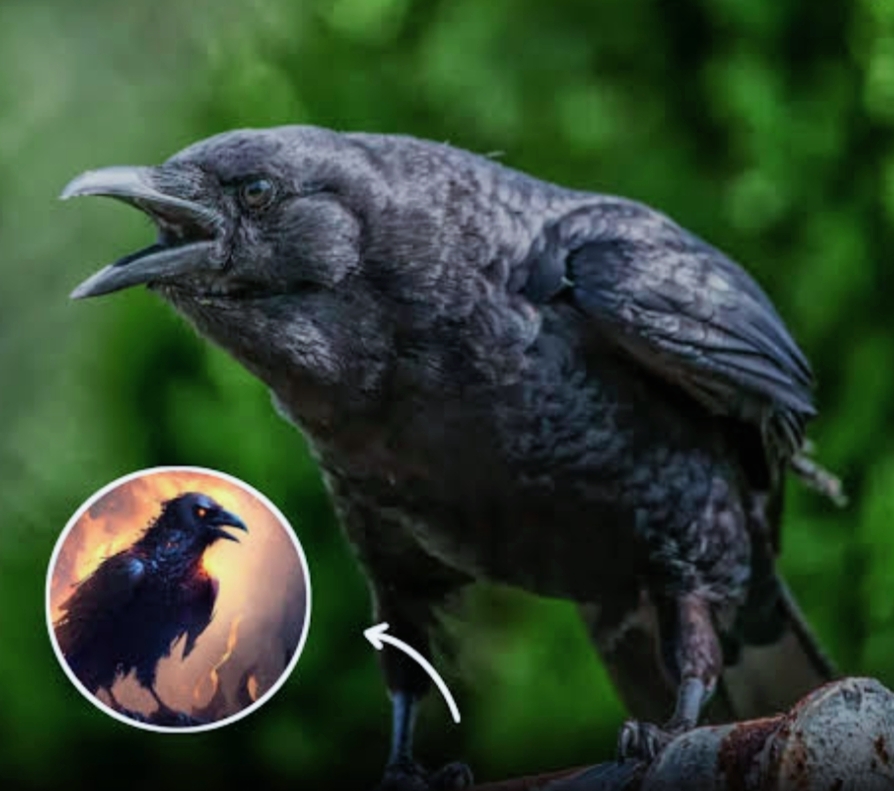
You could have made a pretty nasty enemy who might hold a grudge for almost twenty years. So, don’t be shocked.
For ages, folk tales and local stories have talked about how smart birds are, but it wasn’t until the early 2000s.
It all kicked off in 2005 when a group of researchers launched a clever experiment.
The goal was to find out if crows can remember the faces of people who have wronged them. If they can, how long do those memories last?
A few team members were assigned to catch and band the crows. The twist was that they had to wear a special rubber caveman mask to indicate “danger” – helping the crows recognize their faces. Meanwhile, the other team members wore plain masks and let the flock be.
Not long after, the researchers would head out wearing their masks to observe how the crows reacted, and the black fighters certainly didn’t let them down.
The crows became wildly aggressive. They would yell and squawk loudly, dive down from the sky just a few feet above the maskers’ heads, and swoop in to assert their territories.
They even followed the maskers around the campus. Those wearing neutral masks didn’t get the same treatment.
Things got really interesting when, after a while, even the crows that weren’t trapped decided to join the fray.
This trend went on for several years, leading to one clear conclusion – crows can share their knowledge, and their animosity, with other crows in the community.
Throughout all that time, the crows stayed hostile and kept bothering the maskers.
Crows communicate about more than just threats.
They chat using different sounds about other topics like where to find food.
These smart birds are super observant and can copy each other’s body language and eating habits.
They’re known for their tight family bonds and even hold what you could call funerals, where the flock comes together in silence to grieve for their deceased friend.
Crows aren’t the only birds that show aggressive behavior towards threats.
Other birds like the Australian magpie, Northern Mockingbirds, Canada geese, and red-winged blackbirds also use similar tactics to survive.
This strategy of shared aggression is known as “mobbing,” where the whole flock begins to squawk, dive, swoop, and threaten.
This tactic not only intimidates the threat but also makes it hard for the threat to concentrate and attack.
Still, the number of birds that show this grudge holding behavior is quite limited.
DISCLAIMER: This article is derived from information available in the public domain.


Leave a Reply