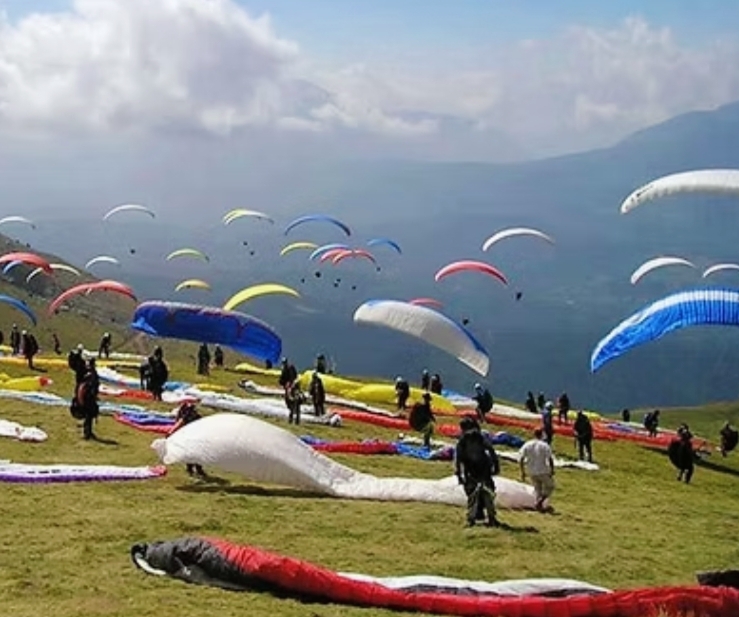
The local tourism department and government have chosen to divide the paragliding areas into green, orange, and red zones due to the rise in paragliding accidents and injuries.
This will help pilots recognize safe flight paths and areas that pose higher risks.
Officials mentioned that to put this plan into action, they will seek help from internationally trained paragliders from Himachal Pradesh, along with thorough mapping of at-risk areas.
After the classification is done, these zones will be indicated on the maps used by paragliders launching from the Bir-Billing site.
This decision was made during a meeting in Baijnath, Kangra district, on Wednesday, which included foreign paragliders, representatives from paragliding associations, and officials from the district tourism department.
Sankalp Sharma, the SDM of Baijnath and head of the Special Area Development Authority (SADA) Bir-Billing, stated, “We have drafted a proposal to split the paragliding area into Green, Orange, and Red zones, allowing pilots to be informed ahead of time about safe flight paths and high-risk zones. Moving forward, all paragliders and pilots are required to fly long distances in groups to ensure quick help in case of any incidents. We have also mandated that all pilots must use tracking devices during their flights so that their locations can be monitored instantly in emergencies.
Sharma mentioned that the zoning decision was made considering both recent and past accidents, where 18 paragliders have tragically lost their lives in the last five years.
The Bir-Billing paragliding zone features two primary spots — the take-off area at Billing (elevation: about 2,400 metres / 7,874 feet) and the landing area at Bir (elevation: roughly 1,400 metres / 4,593 feet).
The flight provides a vertical drop of around 1,000 metres, all set against the stunning backdrop of the Dhauladhar mountain range in Kangra district, Himachal Pradesh.
District Tourism Officer Vinay Dhiman stated, “Boosting tourism in Bir-Billing is a key focus for both the administration and the state government, but this can only happen if all activities are carried out safely and with discipline. We’ve seen paragliders taking off from Bir-Billing and landing randomly at places of their choosing, which often lack proper take-off zones.”
Experts in paragliding who attended the meeting recommended that regular training sessions, weather updates, and emergency rescue drills be organized for pilots. They highlighted that neglecting weather conditions is a major factor in accidents, and it’s crucial for every pilot to be informed about weather alerts before they take off.
On October 27, an Australian paraglider named Andy, who is 51 years old, was rescued almost 20 hours after his crash near Seven Sisters Peak, which is about 13,500 feet high in the Manali subdivision of Kullu district. The crash was reportedly caused by air pressure and bad weather conditions. A fellow pilot who was flying with him saw the accident happen and notified the rescue team. Both pilots had taken off from Bir-Billing and were on their way back when the crash took place.
On October 20, a 27-year-old Canadian paraglider named Megan Elizabeth, who also took off from Bir-Billing, tragically died after crash-landing on a mountain. Between October 21 and October 28, at least three foreign paragliders were rescued after they crash-landed in the high mountains of Kullu, Manali, and Chamba.


Leave a Reply