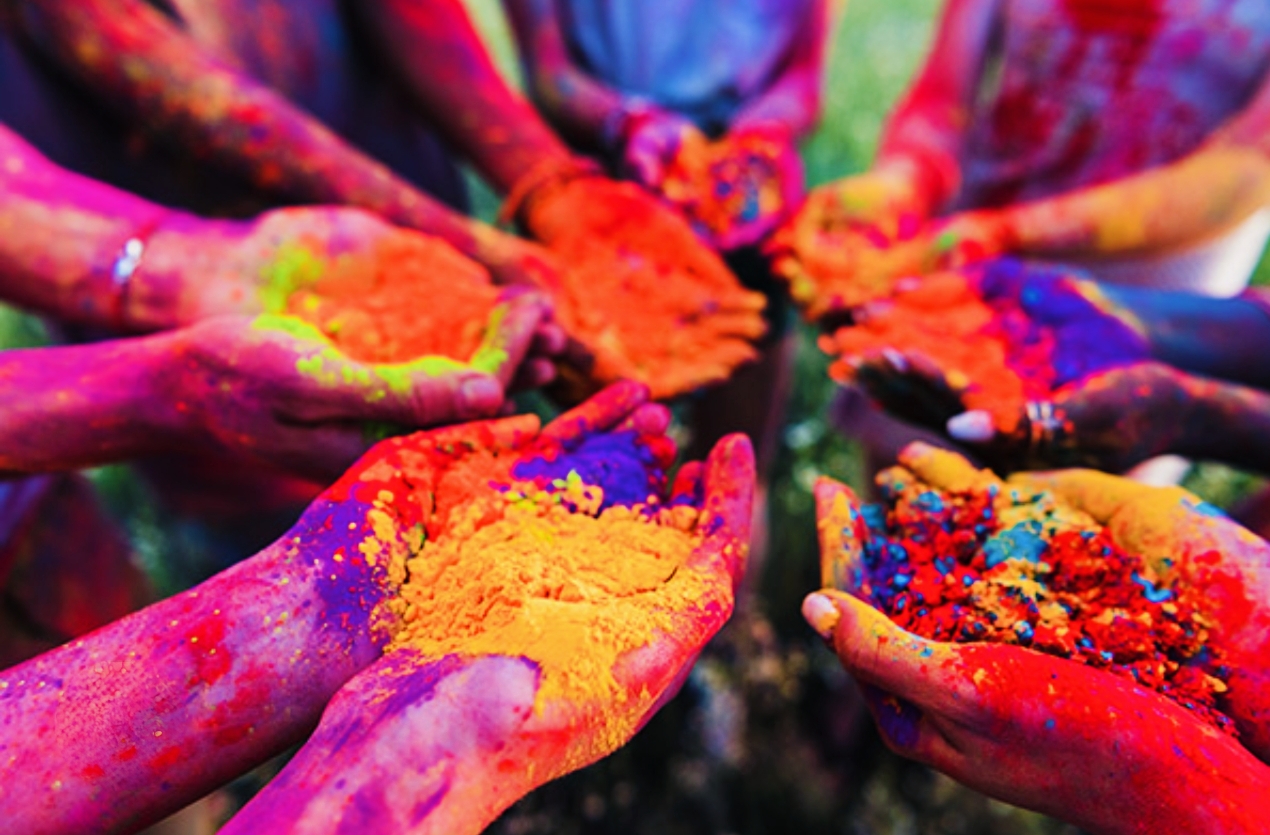
Holi, often referred to as the “Festival of Colours”, is one of the most awaited Hindu festivals after Diwali, celebrated with immense enthusiasm and happiness.
It signifies the arrival of spring, the conclusion of winter, and represents joy, renewal, and the victory of good over evil.
Hindu mythology, cultural practices, and social values deeply shape this festival, making it far more than just a fun event of tossing colors.
At its essence, Holi honors the transition of seasons. As winter gives way to spring, nature bursts into life with blooming flowers, lush greenery, and warmth.
For agricultural communities, this time is particularly significant as it marks a period of growth and new harvests. Therefore, Holi transforms into a celebration of life, fertility, and prosperity.
People show gratitude for a bountiful harvest and pray for ongoing abundance.
History
A key reason for celebrating Holi stems from a well-known myth involving Prahlad, Hiranyakashipu, and Holika.
Hiranyakashipu was a formidable demon king who demanded everyone worship him as a god. However, his son Prahlad was a devoted follower of Lord Vishnu and refused to comply with his father’s wishes.
Furious about Prahlad’s defiance, Hiranyakashipu repeatedly tried to kill him, but Prahlad’s faith protected him every time.
Eventually, Hiranyakashipu enlisted the help of his sister Holika, who possessed a magical boon that rendered her immune to fire. She deceived Prahlad into sitting on a blazing pyre with her, believing he would die while she would remain safe.
However, divine forces caused Holika’s power to fail because she misused it, and the flames consumed her while Prahlad remained unharmed.
This incident symbolizes the triumph of good over evil and faith over pride.
To honor this story, people ignite bonfires on the eve of Holi, a ritual called Holika Dahan, which signifies the destruction of evil forces.
The Colors Of Divine Love
Another important part of Holi is its connection to the divine love between Krishna and Radha.
Krishna, who had a dark skin tone, worried that Radha, who was fair-skinned, might not accept him.
His mother jokingly suggested that he put color on Radha’s face, which sparked a joyful and symbolic act of coloring each other.
This playful exchange turned into a tradition, and nowadays, people celebrate Holi by throwing colors on one another, representing love, equality, and unity.
The colors used during Holi have profound symbolic significance.
Each color represents different feelings and aspects of life.
Red represents love and fertility, yellow brings knowledge and happiness, green signals new beginnings, and blue reflects divine energy.
When people toss colors at each other, it breaks down social barriers and fosters a sense of togetherness.
During Holi, people forget distinctions of caste, class, age, and status, allowing everyone to celebrate together equally.
Holi is a time to forgive, reconnect, and start fresh.
People let go of past conflicts, mend relationships, and come together in joy, laughter, and goodwill—strengthening bonds and social harmony.
In many parts of India, people celebrate Holi over two days: Holika Dahan and Rangwali Holi.
Holika Dahan And Rangwali Holi
The first day, known as Holika Dahan, Jalawali Holi, or Chhoti Holi, involves people honoring Holika and burning her effigy as part of the festivities.
People celebrate this day by lighting a bonfire called ‘Holika Dahan’, symbolizing the victory of faith and righteousness over evil.
The second day, called Rangwali Holi or Dhulandi, focuses on fun with dry gulaal and watercolors, and people consider it the main day of Holi.
Rangwali Holi mainly honors the everlasting and divine love between the deities Radha and Krishna, while also celebrating the arrival of spring in India and the conclusion of winter.
Taste Of Holi Celebrations
Food and music are super important during Holi celebrations too.
Families prepare traditional treats like gujiya and malpua and share them along with drinks like thandai.
Delicious treats add to the excitement, with sweets and snacks prepared in households and shared generously.
People fill the atmosphere with excitement and joy as they sing, dance, and celebrate together.
In many places, people celebrate Holi for several days, with each day featuring unique customs and rituals.
Holi 2026
Holi begins on the evening of Purnima (full moon day) in the Hindu month of Phalguna, usually occurring between late February and mid-March.
This year, in 2026, Holika Dahan is set for Tuesday, March 3, and Rangwali Holi will follow on Wednesday(March 4,2026).
On the eve of Holi, people light bonfires to represent the triumph of good over evil and create a sense of warmth and unity.
Nowadays, Holi is recognized worldwide and celebrated in many countries outside of India.
Observed across India and many regions worldwide, this festival brings communities together through color, music, and shared traditions.
Streets fill with laughter, dance, and festive songs, creating unforgettable moments.
People from various cultures and backgrounds join in the fun, embracing its universal themes of joy, love, and unity. While the religious and mythological aspects still matter, the festival’s joyful and inclusive spirit has made it a global favorite.
Beyond celebration, Holi carries deeper meaning by reminding people about positivity, hope, and new beginnings.
Nature’s transformation during this season reflects life’s continuous cycle of change and growth.
Holi encourages us to live life to the fullest, release negativity, and strengthen our bonds with others. Its bright colors, rich traditions, and deep symbolism make it one of the most beloved festivals around the globe.


Leave a Reply