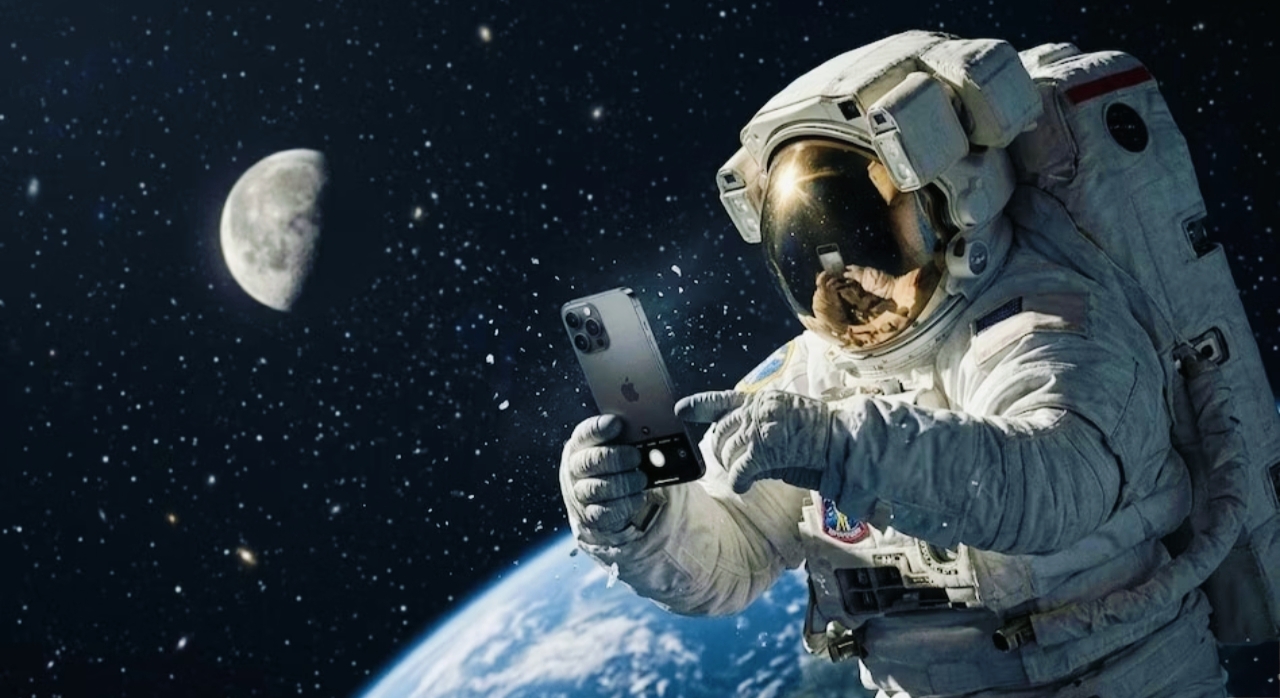
What happens when cutting-edge smartphones meet the extreme conditions of space—could your everyday iPhone survive a trip to the Moon?
In a fascinating mix of everyday technology and deep-space exploration, NASA has given the green light for astronauts on the Artemis II mission to use Apple iPhone devices.
A NASA team placed iPhones into astronaut suits while preparing for the upcoming Moon launch.
Smartphones Join The Journey To The Moon
Four astronauts embarked on a 10-day journey around the Moon as Space Launch System lifted off powerfully from Kennedy Space Center on Thursday, April 2, 2026.
This mission marks a shift in how space agencies approach in-flight documentation and personal experiences during deep-space travel.
For the first time, NASA allows astronauts to carry familiar consumer technology, blending everyday gadgets with historic space exploration.
Under a new policy introduced in early 2026 by Jared Isaacman, crew members can bring modern smartphones inside their suits.
Astronauts will use these devices primarily to capture personal moments and high-quality images during the mission’s lunar flyby.
To ensure safety, the phones will remain in airplane mode throughout the journey, preventing any interference with spacecraft systems or unintended connections to Earth-based networks.
Artemis II marks NASA’s first crewed journey to the Moon in over 50 years, carrying four astronauts on a roughly 10-day mission.
While the mission will not include a lunar landing, it plays a crucial role in testing key systems needed for future deep-space exploration.
NASA designed these efforts to pave the way for upcoming missions that aim to return humans to the Moon’s surface.
A notable addition to this mission is the inclusion of Apple iPhone devices, highlighting NASA’s evolving approach to space travel.
By allowing astronauts to use familiar technology, the agency hopes to capture more personal, real-time images and videos during the journey.
This shift could make complex space missions feel more relatable, helping people on Earth connect more closely with life beyond our planet.
Safety First: Smartphones In Space
NASA has made it clear that safety remains the top priority, even with the introduction of Apple iPhone devices on the mission.
The smartphones will operate completely independent of onboard spacecraft systems, following strict protocols to prevent any interference.
When astronauts enable airplane mode, the devices disable all wireless functions and operate as standalone tools for photography and recording.
Bringing Space Closer To Everyday Life
As Artemis II launches, the presence of Apple iPhone devices highlights a growing trend in space exploration.
NASA is increasingly blending advanced mission technology with familiar, everyday gadgets.
This approach brings a more human and relatable perspective to deep-space travel.
For millions watching from Earth, the Moon may soon feel closer than ever—captured through the same devices they use in their daily lives.
If astronauts can capture the Moon with the same phones we use every day, how much closer will space exploration feel to the rest of us?


Leave a Reply