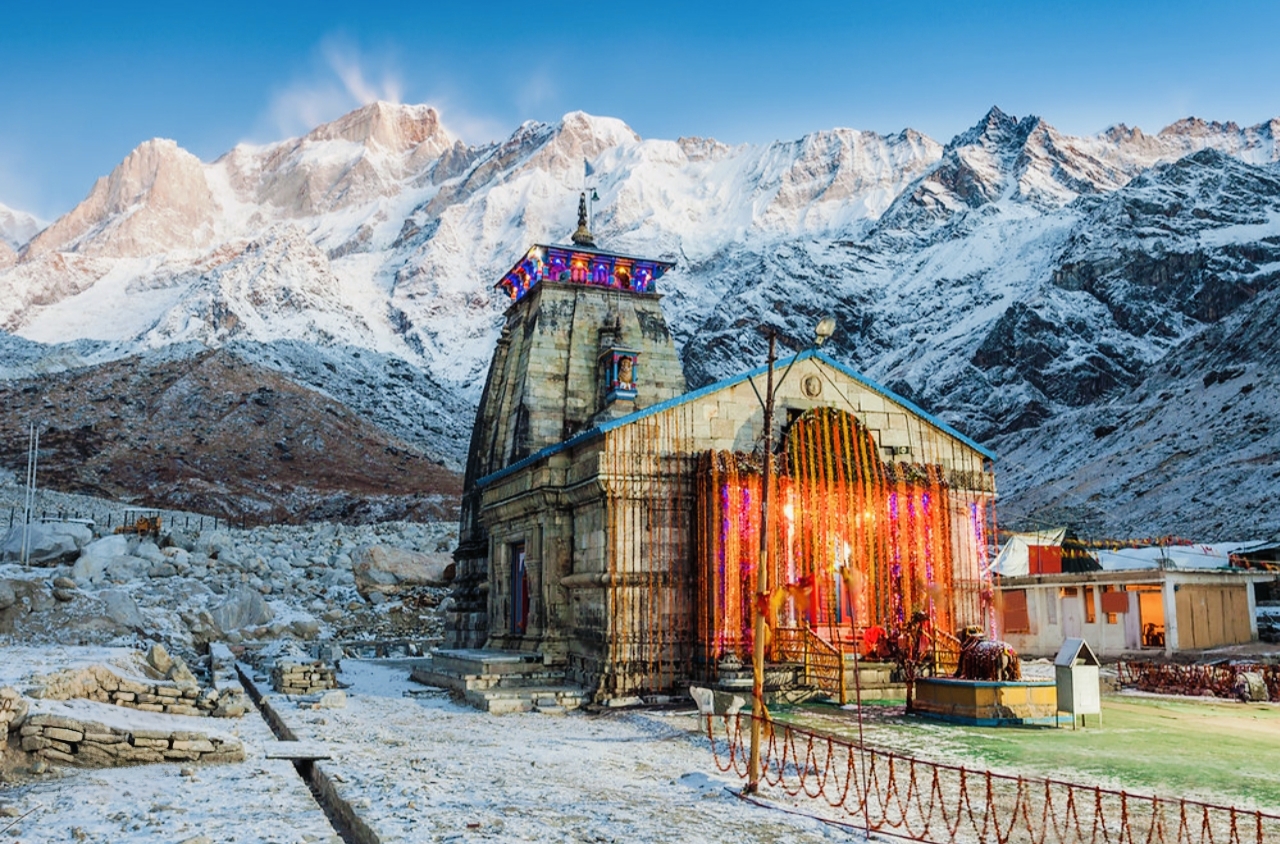
Ready to witness one of the Himalayas’ most spiritual and scenic pilgrimages as Rudranath Temple reopens its doors to devotees and trekkers?
Nestled deep in the Garhwal Himalayas, Rudranath Temple is set to reopen for the new pilgrimage season, drawing Shiva devotees and adventure seekers alike.
Opening dates, trek routes, weather updates, and essential travel tips — here’s your quick guide to planning a spiritual escape to Rudranath Temple in the Himalayas.
The Himalayan Pilgrimage Season Begins Again
Perched high in the Garhwal Himalayas, Rudranath Temple is among the revered Panch Kedar shrines dedicated to Lord Shiva.
Located in Uttarakhand’s Chamoli district at over 3,500 metres, the temple remains shut through winter due to heavy snowfall and harsh weather conditions.
Preparations are underway to reopen the sacred shrine as pilgrims and trekkers gear up for the spiritual journey through the Himalayas.
Known for its breathtaking mountain trails and deep religious significance, the reopening marks the beginning of another vibrant pilgrimage season in the region.
Temple Reopening Day
The reopening of Rudranath Temple will follow age-old rituals and traditional customs observed every year.
The journey of Lord Shiva’s idol is scheduled to begin from Gopeshwar on May 16.
A ceremonial doli procession carrying the deity will continue towards the temple on May 17 amid prayers and religious celebrations.
The temple gates are set to officially reopen at 1 pm on May 18 after the completion of sacred rituals and pujas.
During winter, devotees worship the deity at Gopinath Temple, which serves as the temple’s seasonal winter seat.
Myth Of Shiva’s Divine Face
Rudranath Temple holds deep religious importance as it is believed to be the divine site where the face (mukh) of Lord Shiva manifested.
According to Hindu mythology linked to the Mahabharata, the Pandavas sought Lord Shiva after the Kurukshetra war to seek forgiveness.
To avoid them, Lord Shiva is said to have taken the form of a bull and disappeared into the Himalayas.
His divine form later reappeared at different locations, with the face emerging at Rudranath, making it a sacred part of the Panch Kedar pilgrimage.
Rudranath: The Face Of Divine Worship
Rudranath Temple is unique among Shiva shrines, where Lord Shiva is worshipped in his Ekanan form, meaning only his face is revered.
This form of worship sets it apart from Pashupatinath Temple, where devotees worship the complete form of Lord Shiva.
The temple complex also offers stunning panoramic views of Himalayan giants like Nanda Devi and the snow-clad peaks of Trishul Peak.
It holds an important position as the fourth shrine in the sacred Panch Kedar circuit, alongside Kedarnath Temple, Tungnath Temple, Madhyamaheshwar Temple, and Kalpeshwar Temple.
Blending mythological significance, deep devotion, and stunning natural beauty, the shrine stands as a powerful symbol of faith in the Himalayas.
A Scenic Trek To Rudranath Temple
The nearest air connectivity to Rudranath Temple is via Jolly Grant Airport in Dehradun.
For rail travel, the closest major stations are Rishikesh Railway Station and Haridwar Railway Station.
From these points, travellers typically drive towards base locations like Gopeshwar or Sagar village in Uttarakhand.
The final stretch involves an 18–20 km trek from Sagar or Mandal, passing through dense forests, alpine meadows, and rugged mountain trails.
This demanding yet rewarding journey makes the pilgrimage to Rudranath Temple a true adventure amid the Himalayas.
Devotion Returns To Rudranath
Every year, the reopening of Rudranath Temple is marked by traditional rituals performed by priests and local sevadars.
The event draws pilgrims from across the country, coming together to witness the sacred ceremonies and seek blessings.
For many devotees, the journey is more than just a pilgrimage—it becomes a powerful blend of faith, endurance, and the breathtaking beauty of the Himalayas.
Rudranath Temple beautifully blends faith, endurance, and Himalayan natural beauty. As it reopens, it calls both devotees and trekkers to embark on a journey that goes beyond a pilgrimage—deep into the heart of the Himalayas.
Best time to visit: May–June and September–October offer ideal weather for the journey.
Avoid: The peak monsoon season, as landslides can make the route risky.
Preparation: A good level of fitness, warm clothing, and early morning starts are essential for a safe trek.
Are you ready to take on a sacred Himalayan journey to Rudranath Temple this season?
DISCLAIMER: This article is derived from information available in the public domain.It’s always a good idea to check your doctor before beginning any new routine.
Top News
- The Future Of Air Travel: Why The 100ml Liquid Limit May Soon Disappear

- Rising Temperatures, Rising Tempers? The Surprising Link Between Heat And Aggression

- India’s Lost Dragonfly Returns After 110 Years

- Snapchat Introduces Safer Story Sharing For Under-16 Users

- Google Launches Gemini 3.5 Live Translate


Leave a Reply