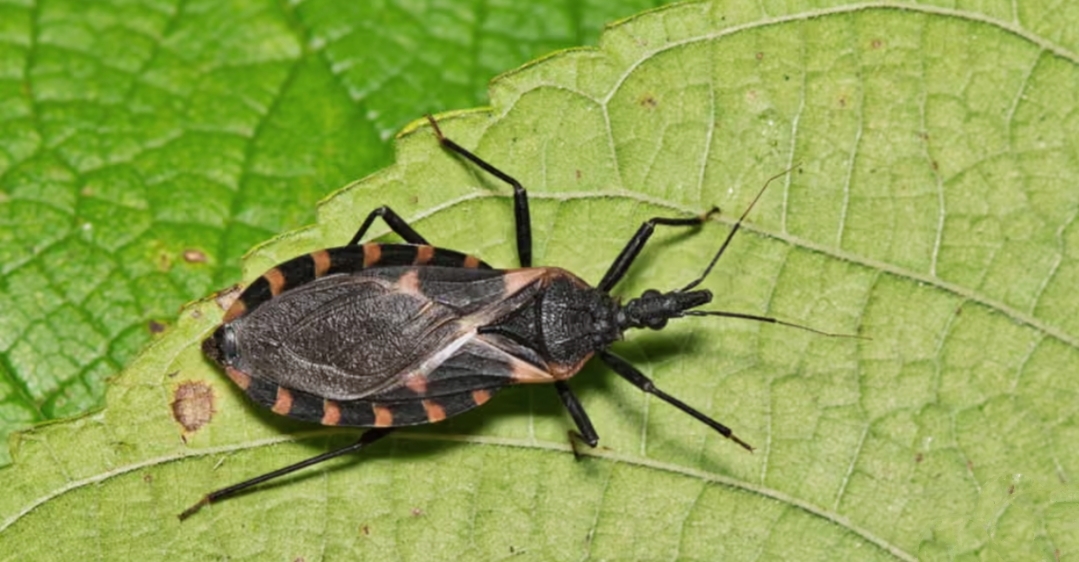
The Kissing Bug disease trending online lately – along with pictures of the little troublemaker, a dark insect about the size of a penny, sporting orange and red patterns on its sides.
Officially known as Chagas disease, this kissing bug disease is found in 21 countries throughout Latin America.
Kissing Bugs Disease
Triatomine bugs – also known as kissing bugs are bloodsucking insects that often bite people’s faces, giving them their grim nickname.
Approximately half of these bugs carry a parasite that leads to Chagas disease, which is transmitted when the insects defecate.
If you scratch the bite or rub your
eyes, you might inadvertently introduce the infected fecal material into your body.
Kissing bugs have been spotted in 32
states.
The majority of others contracted the disease in Latin America before traveling or immigrating to the United States.
Additionally, there have been instances of local transmission in people across 8 states: California, Arizona, Texas, Tennessee, Louisiana, Missouri, Mississippi, and Arkansas.
Signs And Symptoms
- A lot of folks might not even notice they’ve been bitten by a kissing bug, some might deal with minor swelling, itching, or an allergic reaction.
- In the days or weeks following an infection, Chagas disease can lead to a fever, fatigue, and other flu-like symptoms.
- If people experience eyelid swelling. If symptoms do occur, they typically go away on their own.
Approximately 70% of patients won’t experience any long term symptoms, but some may go on to develop serious heart issues.
The initial symptoms can be quite mild, like an irregular heartbeat, but for certain patients, the first indication of infection could be a stroke or even sudden cardiac death.
There are two medications available that can eliminate the parasite and treat this illness, although they are generally more effective when initiated shortly after the infection occurs.
What Steps Can Take?
1)Kissing bugs sometimes make their way into homes and can also be spotted in kennels and hunting lodges, as dogs, raccoons, possums, and skunks often carry them.
2)To lower the chances of these bugs entering your home, think about putting up window and door screens and sealing any gaps in those screens or in your walls.
3)It might also be a good idea to consult an exterminator if you’ve noticed kissing bugs in or around your property.
Plus, make sure to clear away any nearby wood piles or other clutter, since these bugs like to hang out there.
4)If someone in your family has been diagnosed with Chagas disease, it’s a good idea to get tested since the bugs are likely in your home.
5)Women who can become pregnant should be especially cautious, as Chagas disease can be transmitted to a fetus but isn’t typically screened for during prenatal check ups.
If kissing bugs are present in your area or if you’re concerned, talk to your doctor about getting tested.
DISCLAIMER: This article is derived from information available in the public domain.It’s always a good idea to check your doctor before beginning any new routine.
- FIFA World Cup 2026: How Fans Can Watch Matches For Free

- YouTube Relaunches Private Chats With Age Verification

- The Future Of Air Travel: Why The 100ml Liquid Limit May Soon Disappear

- Rising Temperatures, Rising Tempers? The Surprising Link Between Heat And Aggression

- India’s Lost Dragonfly Returns After 110 Years

- Snapchat Introduces Safer Story Sharing For Under-16 Users

- Google Launches Gemini 3.5 Live Translate

- The New Dating Trend Everyone’s Talking About: Puffer-Fishing

- Tea, Coffee, Juice: The Worst Empty Stomach Mistakes

- Instagram Introduces Profile Grid Customization

- Skywatchers Alert: Jupiter And Venus Set For A Rare Close Encounter Tonight

- Chrome Just Downloaded a 4GB AI Model? Here’s How to Delete It

- Why Does Real Love Feel Different Than We Expect?

- The 30-Minute Parenting Secret Every Child Needs

- Remote Robotics: Control Robotic Arms From Your Smartphone

- Mumbai’s Pod Taxis: Will BKC Benefit?

- Beyond The Missing Period: Understanding MRKH Syndrome

- Why Calling Every Stomach Problem ‘Gas’ Can Be Risky?

- Poke: Apple’s First AI Agent Debuts

- AC Drying Out Your Skin? Try This Simple Fix

- Want More Fireflies? Transform Your Garden Today

- Spotify Launches Podcast Clips For Instant Highlight Saving

- The Hidden Reason Summer Causes More Headaches

- Early Iron Deficiency Symptoms You Shouldn’t Ignore

- Meta Introduces Premium ‘Plus’ Tier For Instagram, Facebook And WhatsApp

- WhatsApp Launches Channel Status For 24-Hour Admin Updates

- 5 Powerful Signs You’re With The Right Person

- Social Media: The New Smoking For Children?

- Dewy, Glossy, Sweaty: The Viral Makeup Trend Everyone’s Trying

- Luna Launches Smart AI Band For Real-Time Daily Planning

- Meta Launches New ‘Forum’ App

- Why Is Your C-Section Scar Vertical?

- Red vs Orange Heat Alerts: Which One Puts Your Body At Greater Risk?

- Does AC Sleep Weaken Your Immunity? – Myth or Fact?

- The Rise Of Nonnamaxxing

- How To Clean Mushrooms Without Turning Them Soggy?

- How Hot Nights Quietly Harm Your Sleep And Heart?

- Indian Content Creators Can Win a Free Nepal Trip — Here’s How To Apply

- Gemini Omni Flash Brings Multimodal AI Video Creation To Google

- Essential Oil Diffusers: Healthy Trend or Hidden Hazard?

- Gmail Users Alert: Your Free 15 GB Storage Could Disappear

- YouTube Introduces Likeness Detection For 18+ Users

- AI vs Human Language: Is Learning Still Worth It?

- OpenAI Unveils ChatGPT Finance Tools With Direct Bank Integration

- The Ageing Risk Of Sleeping Too Much Or Too Little

- Fitness or Future Pain? The Truth About Joint-Damaging Workouts

- Salt Water Trend: What You Need To Know First?

- X Launches History Tab For Likes, Bookmarks And Videos

- Stay Chill: Smart Gadgets For Summer

- Instagram Launches Instant For Disappearing Photos

- ChatGPT App Now Supports Codex Coding Tool


Leave a Reply