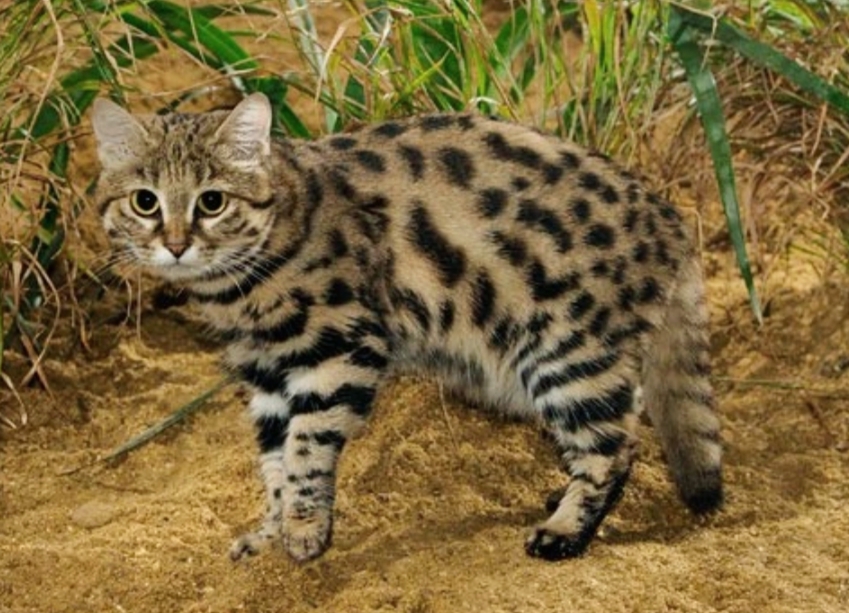
This little wild adorable cat may not be as well known as lions or cheetahs, but what it lacks in fame and size, it more than compensates for with its incredible hunting skills.
In fact, it’s often called the most effective predator among felines.
The black-footed cat is the tiniest wild cat species in Africa, measuring only about 8 inches tall and weighing between 2 to 5 pounds.
That’s roughly the size of a big guinea pig. But remember, appearances can be misleading.
This cat gets its name from the black fur on the bottoms of its feet, which actually helps it sneak around quietly on sandy, dry ground.
Its coat is stunningly patterned with bold dark spots and stripes that allow it to blend into the arid savannas and deserts it inhabits.
Black footed cats primarily reside in southern Africa.
They favor dry, open spaces like the Kalahari Desert and the Karoo, where they take refuge in abandoned burrows during the day and do their hunting at night.
These cats are solitary and quite shy, making it tough for researchers to spot them in their natural habitat. This little cat is a phenomenal hunter.
On average, a black-footed cat will catch between 10 to 14 prey animals each night, dining on rodents, birds, insects, and even hares or reptiles when the opportunity arises.
This impressive hunting ability means it could consume up to 3,000 animals in a year. It’s no surprise it’s often referred to as the “anthill tiger.”
What’s even more remarkable?
It employs a range of hunting techniques, sometimes stalking quietly, other times sprinting after prey in quick bursts, or simply waiting still for the ideal moment to ambush.
Black Footed Cats Life And Survival
Black-footed cats breed seasonally, with females usually giving birth once or twice a year, mainly between October and March.
They typically have small litters, averaging one to two kittens, and the little ones become independent in just a few months.
In the wild, these cats can live for up to 13 years, but in captivity, they can reach around 15 years with the right care.
Even with their incredible skills, black-footed cats are facing challenges.
The IUCN currently classifies them as Vulnerable, estimating that there are fewer than 10,000 adults remaining in the wild.
Their main threats include habitat destruction, poisoned prey, car accidents, and attacks from other predators.
Plus, since they depend on burrows made by other animals like springhares or aardvarks, any disruption to their habitat can lead to serious problems.
- FIFA World Cup 2026: How Fans Can Watch Matches For Free
- YouTube Relaunches Private Chats With Age Verification
- The Future Of Air Travel: Why The 100ml Liquid Limit May Soon Disappear
- Rising Temperatures, Rising Tempers? The Surprising Link Between Heat And Aggression
- India’s Lost Dragonfly Returns After 110 Years


Leave a Reply