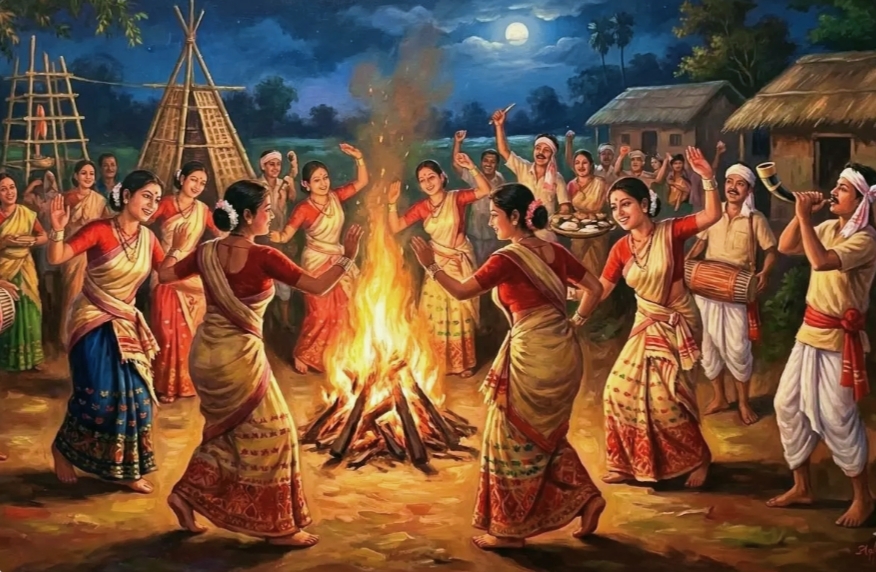
Magh Bihu is an important festival in Assam that celebrates the end of the harvest season during the month of Magh, which falls between January and February.
Also referred to as Maghor or Boghali Bihu.
It’s one of the three Bihu festivals that the community observes, and the term ‘Bhogali Bihu’ comes from ‘Bhog’, meaning to eat and enjoy.
There is a lot of food, music, and dancing during the celebrations, which also include bonfires made of fuel, hay, green bamboo, and dried banana leaves.
Traditionally, people take baths before lighting the fire.
Magh, also known as Bhogali Bihu, takes place in mid-January during the month of Magh; it coincides with the last day of the month of Pooh, or Pausha.
This day also aligns with Makar Sankranti, marking the start of the Sun’s journey northward, known as Uttarayan.
Date And Time
In 2026, the festival will be celebrated on January 15, which is a Thursday.
The celebrations kick off a day before Bhogali Bihu, called Uruka, which is the final day of the lunar month of Pousha.
Significance
On this day, a lavish feast known as bhog is prepared to mark the first night of the celebrations.
Young guys whip up makeshift thatched-roof huts called ‘bhelaghar’, and they set up a ‘meji’ (bonfire) using hay and bamboo.
The women prepare the feast inside the bhelaghar, featuring delicious rice cakes like Sunga Pitha, Til Pitha, and coconut laddoos.
Everyone gathers around these mejis at night, singing songs and enjoying folk dances.
The following morning, people take a bath, and the Meji is set ablaze, which is thought to signal the end of winter.
Moreover, this festival, rooted in Assamese culture, includes traditional practices such as tekeli bhonga (pot-breaking) and buffalo fights, along with prayers to ancestral deities for blessings.
- The Future Of Air Travel: Why The 100ml Liquid Limit May Soon Disappear

- Rising Temperatures, Rising Tempers? The Surprising Link Between Heat And Aggression

- India’s Lost Dragonfly Returns After 110 Years

- Snapchat Introduces Safer Story Sharing For Under-16 Users

- Google Launches Gemini 3.5 Live Translate

- The New Dating Trend Everyone’s Talking About: Puffer-Fishing

- Tea, Coffee, Juice: The Worst Empty Stomach Mistakes

- Instagram Introduces Profile Grid Customization

- Skywatchers Alert: Jupiter And Venus Set For A Rare Close Encounter Tonight

- Chrome Just Downloaded a 4GB AI Model? Here’s How to Delete It

- Why Does Real Love Feel Different Than We Expect?


Leave a Reply