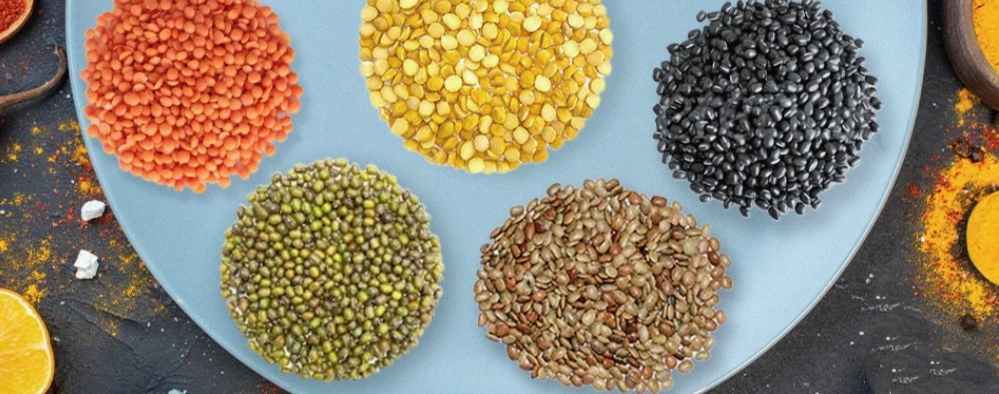
Pulses and cereals are key components of a daily diet, they can sometimes cause digestive problems like gas, bloating, and constipation.
It doesn’t mean you should avoid dals, as they are a vital source of protein and contribute to overall health.
Antinutritional factors (like phytic acid, lectins, protease inhibitors, and tannins) can disrupt enzymes. Therefore, pulses with lower levels of these or those that have been processed to minimize them are generally more digestible.
Processing methods such as soaking, germination (sprouting), cooking, and autoclaving (pressure cooking) can significantly enhance digestibility.
The structure of starch, including the amylose to amylopectin ratio, crystallinity, and granule structure, also plays a role.
Pulses that have lower resistant starch or those that contain starch that is more quickly or slowly digestible tend to be easier.
Which Dal Is The Most Easily Digested?
Mung bean (moong dal): It has good starch digestibility; germination boosts both rapidly digestible starch (RDS) and slow digestible starch (SDS). After sprouting, it has lower resistant starch, making it generally one of the easier options.
Chickpea: It has higher antinutritional factors, making its digestibility lower than that of mung or lentils in many cases, but it improves significantly with soaking, cooking, and sprouting.
Pigeon pea (toor dal): This has lower digestibility compared to some others, especially regarding protein, and contains more resistant starch. However, it also benefits from cooking and other methods.
Moong dal and masoor dal are the easiest on the stomach – their proteins and starches break down more easily, and they have fewer antinutritional compounds.That’s why moong khichdi is traditionally given to kids, the elderly, and those recovering from illness.
On the flip side, dals such as chana, toor, and especially urad tend to be heavier since they have more resistant starch and gas-producing oligosaccharides. While they are nutritious, they can lead to bloating or discomfort for those who are sensitive.
If you want the lighter options, start with moong and masoor.
For better digestion or when combined with spices that help with gut comfort (like cumin, or ginger), the heavier dals can definitely be enjoyed too.
Here are three guidelines for incorporating pulses into your diet:
1)Soaking and sprouting them before cooking helps reduce anti-nutrients and allows for optimal enzyme action to break them down.
Pulses are a great source of protein, vitamins, and minerals, but they can be tricky to digest. They naturally contain what are known as anti-nutrients, which can hinder nutrient absorption.
This is why many people experience gas, bloating, and indigestion after eating them.
2)Combine them with millets and grains to boost the ratio of essential to non-essential amino acids.
When paired with rice, the ratio is 1:3, and with a mix of millets and grains, it’s 1:2.
The reason for this is that pulses and legumes are missing an amino acid called methionine, while grains lack lysine.
Pulses are rich in lysine, but without a complete set of amino acids like methionine, they can’t do their job fully.
Methionine contributes to,
- Antiaging – stops premature greying.
- Immunity – aids in building antibodies during attacks
- Bone mass strengthens and preserves it.
3)Enjoy a variety of pulses and consume them in different forms to maximize nutrient intake.
DISCLAIMER: This article is derived from information available in the public domain.It’s always a good idea to check your doctor before beginning any new routine.
- New Zealand Legend Kane Williamson Announces Retirement

- FIFA World Cup 2026: How Fans Can Watch Matches For Free

- YouTube Relaunches Private Chats With Age Verification

- The Future Of Air Travel: Why The 100ml Liquid Limit May Soon Disappear

- Rising Temperatures, Rising Tempers? The Surprising Link Between Heat And Aggression

- India’s Lost Dragonfly Returns After 110 Years

- Snapchat Introduces Safer Story Sharing For Under-16 Users

- Google Launches Gemini 3.5 Live Translate

- The New Dating Trend Everyone’s Talking About: Puffer-Fishing

- Tea, Coffee, Juice: The Worst Empty Stomach Mistakes

- Instagram Introduces Profile Grid Customization

- Skywatchers Alert: Jupiter And Venus Set For A Rare Close Encounter Tonight

- Chrome Just Downloaded a 4GB AI Model? Here’s How to Delete It

- Why Does Real Love Feel Different Than We Expect?

- The 30-Minute Parenting Secret Every Child Needs

- Remote Robotics: Control Robotic Arms From Your Smartphone

- Mumbai’s Pod Taxis: Will BKC Benefit?

- Beyond The Missing Period: Understanding MRKH Syndrome

- Why Calling Every Stomach Problem ‘Gas’ Can Be Risky?

- Poke: Apple’s First AI Agent Debuts

- AC Drying Out Your Skin? Try This Simple Fix

- Want More Fireflies? Transform Your Garden Today

- Spotify Launches Podcast Clips For Instant Highlight Saving

- The Hidden Reason Summer Causes More Headaches

- Early Iron Deficiency Symptoms You Shouldn’t Ignore

- Meta Introduces Premium ‘Plus’ Tier For Instagram, Facebook And WhatsApp

- WhatsApp Launches Channel Status For 24-Hour Admin Updates

- 5 Powerful Signs You’re With The Right Person

- Social Media: The New Smoking For Children?

- Dewy, Glossy, Sweaty: The Viral Makeup Trend Everyone’s Trying

- Luna Launches Smart AI Band For Real-Time Daily Planning

- Meta Launches New ‘Forum’ App

- Why Is Your C-Section Scar Vertical?

- Red vs Orange Heat Alerts: Which One Puts Your Body At Greater Risk?

- Does AC Sleep Weaken Your Immunity? – Myth or Fact?

- The Rise Of Nonnamaxxing

- How To Clean Mushrooms Without Turning Them Soggy?

- How Hot Nights Quietly Harm Your Sleep And Heart?

- Indian Content Creators Can Win a Free Nepal Trip — Here’s How To Apply

- Gemini Omni Flash Brings Multimodal AI Video Creation To Google

- Essential Oil Diffusers: Healthy Trend or Hidden Hazard?

- Gmail Users Alert: Your Free 15 GB Storage Could Disappear

- YouTube Introduces Likeness Detection For 18+ Users

- AI vs Human Language: Is Learning Still Worth It?

- OpenAI Unveils ChatGPT Finance Tools With Direct Bank Integration

- The Ageing Risk Of Sleeping Too Much Or Too Little

- Fitness or Future Pain? The Truth About Joint-Damaging Workouts

- Salt Water Trend: What You Need To Know First?

- X Launches History Tab For Likes, Bookmarks And Videos

- Stay Chill: Smart Gadgets For Summer

- Instagram Launches Instant For Disappearing Photos


Leave a Reply