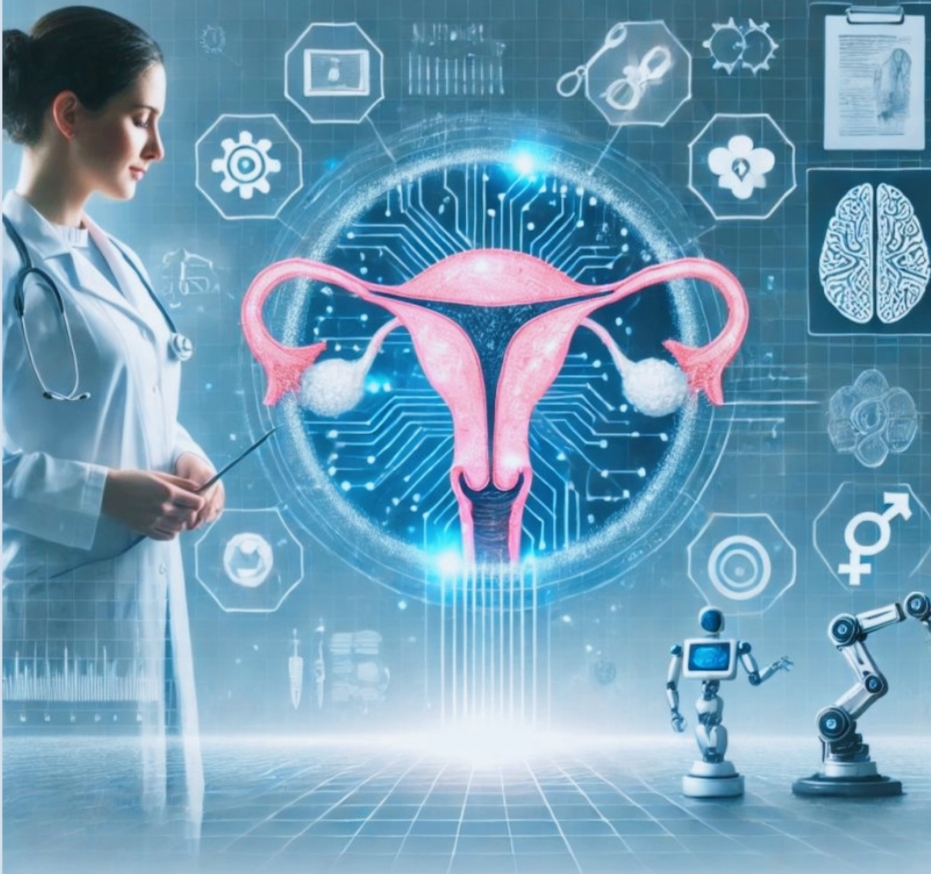
AI in medicine is being seen more and more as a game changer, with the potential to speed up diagnoses, smoothly connect a patient’s medical records across different systems, analyze and interpret images and lab results, assist in medical modeling, and maybe even lend a hand to surgeons.
Among the various areas in medicine where AI is starting to make an impact, obstetrics and gynecology appears to be on the brink of a major transformation.,
AI is being utilized more and more in gynaecology for a range of purposes like diagnosis, treatment planning, and patient care. AI driven tools are being employed for things like image analysis, predictive modeling, and personalized medicine.
Over the next 5-10 years, we can look forward to AI becoming even more essential in gynaecology, with possible uses in areas such as robotic assisted surgery, optimizing fertility treatments, and managing menopause.
AI is the stethoscope of the 21st century. It can help doctors provide safer and more personalized healthcare for women, whether in urban hospitals or remote tribal villages.
AI’s Uses
Nowadays, an AI model created from regular antenatal data can alert doctors about the chances of pre eclampsia or postpartum haemorrhage weeks in advance compared to the older scoring systems.
Aside from data analysis, ultrasound machines are now equipped with ‘auto-measure’ buttons that can capture standard foetal planes in mere seconds. Systems like SonoCNS can automatically segment the foetal heart or brain, label each chamber, and providing accurate biometrics.
AI is also great for analyzing ultrasound images to identify any issues and evaluate risks in high-risk pregnancies. It can even help forecast the likelihood of preterm births and evaluate complications like high blood pressure and organ damage.
Additionally, it can assist in creating tailored treatment plans for conditions like PCOS and menopausal symptoms.
In practical clinical settings, AI has limited utility at least in this field.
Real-time AI powered fetal monitoring continuously analyzes fetal heart rate during labor and quickly detects any abnormalities, which has led to an 82 percent reduction in stillbirths.
AI in IVF
In IVF, a woman’s egg is extracted and combined with sperm in a lab to create an embryo, which is then implanted in the uterus. Unfortunately, their IVF attempts didn’t work out because of azoospermia, a rare condition where there are no measurable sperm in the sample instead of the usual hundreds of millions. Eventually, at the Columbia University Fertility Center in the U.S., after hours of painstaking searching under a microscope for sperm in the husband’s sample, AI was utilized, successfully identifying and retrieving three sperm that were then used to fertilize the wife’s eggs. This made the woman the first to achieve a successful pregnancy through this innovative ‘STAR’ method.
AI is also being employed to pinpoint the most viable oocytes and embryos those with a high likelihood of resulting in a pregnancy as well as to determine the optimal timing for embryo transfer to the uterus.
AI is providing us with amazing new tools in IVF. Helping us select the best embryos, customize treatments, and enhance success rates. It doesn’t replace the doctor’s judgment but rather complements it with sharper insights. It improved embryo selection through AI might soon eliminate the need for invasive testing.
Risks And Privacy Concerns
When it comes to AI, privacy and data issues have come to the forefront. AI systems need access to sensitive patient information, which must be safeguarded against unauthorized access and misuse. Gaining patient consent is essential for fostering trust in AI-driven healthcare solutions.
Doctor warns that data shared online is permanent, emphasizing the importance of removing patient identifiers and private details to ensure confidentiality.
AI tools must be adapted to fit Indian contexts and the needs of Indian women, respecting our diversity in body types and disease patterns.
If AI systems are trained on biased data, they could result in unequal treatment and skewed outcomes for specific patient groups.
- The Future Of Air Travel: Why The 100ml Liquid Limit May Soon Disappear
- Rising Temperatures, Rising Tempers? The Surprising Link Between Heat And Aggression
- India’s Lost Dragonfly Returns After 110 Years
- Snapchat Introduces Safer Story Sharing For Under-16 Users
- Google Launches Gemini 3.5 Live Translate


Leave a Reply