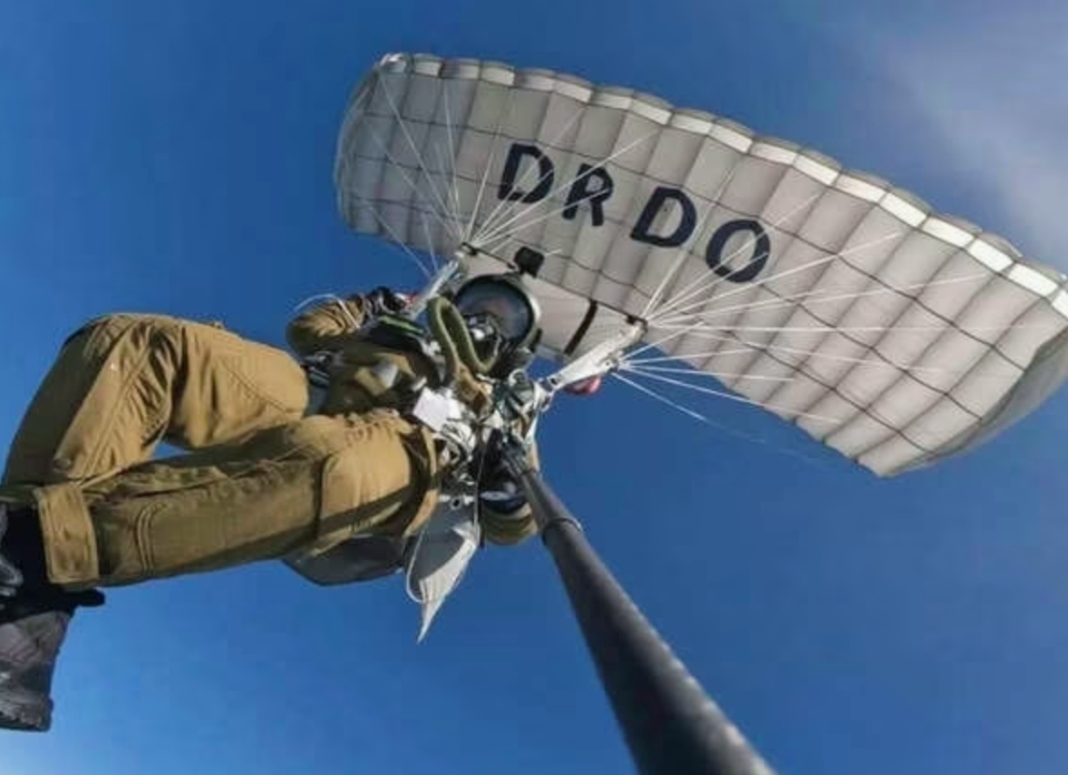
A military combat parachute system, developed in-house by the DRDO, has been “successfully” tested at an altitude of 32,000 ft, paving the way for the introduction of homegrown parachute systems, officials announced on Wednesday (October 15, 2025).
The MCPS was created by DRDO labs- Aerial Delivery Research and Development Establishment in Agra and Defence Bioengineering and Electromedical Laboratory in Bengaluru.
Successful Test
It has “successfully completed a combat freefall jump from an altitude of 32,000 ft”, the Ministry stated.
The jump was carried out by test jumpers from the Indian Air Force, demonstrating the effectiveness, reliability, and advanced design of this indigenous system.
The Ministry announced that it includes a bunch of improved tactical features, like a reduced descent rate and better steering abilities, which allow paratroopers to exit planes safely, open parachutes at set heights, navigate precisely, and land in specific areas.
The system is compatible with Navigation with Indian Constellation (NavIC), which also “gives us the freedom to use it against any enemy we choose, and it’s not vulnerable to interference or denial of service from outside parties or countries”, they mentioned.
NavIC is a homegrown satellite navigation system.
The success of this system (MCPS) has paved the way for the introduction of Indigenous parachute systems.
This will maximize the parachute system’s utility throughout its lifespan because it has the shortest turnaround time for regular maintenance and repairs compared to imported gear.
It will also lessen reliance on other countries for its upkeep during conflicts and wars.
Defence Minister Rajnath Singh praised the Defence Research and Development Organisation (DRDO), the armed forces, and the industry for the successful demonstration.
He called it a “significant milestone” for India’s homegrown defence capabilities.
This milestone makes the military combat parachute system (MCPS) the sole parachute system currently in use by the Indian armed forces that can be deployed above 25,000 ft, according to the Defence Ministry.
- New Zealand Legend Kane Williamson Announces Retirement

- FIFA World Cup 2026: How Fans Can Watch Matches For Free

- YouTube Relaunches Private Chats With Age Verification

- The Future Of Air Travel: Why The 100ml Liquid Limit May Soon Disappear

- Rising Temperatures, Rising Tempers? The Surprising Link Between Heat And Aggression

- India’s Lost Dragonfly Returns After 110 Years

- Snapchat Introduces Safer Story Sharing For Under-16 Users

- Google Launches Gemini 3.5 Live Translate

- The New Dating Trend Everyone’s Talking About: Puffer-Fishing

- Tea, Coffee, Juice: The Worst Empty Stomach Mistakes

- Instagram Introduces Profile Grid Customization

- Skywatchers Alert: Jupiter And Venus Set For A Rare Close Encounter Tonight

- Chrome Just Downloaded a 4GB AI Model? Here’s How to Delete It

- Why Does Real Love Feel Different Than We Expect?

- The 30-Minute Parenting Secret Every Child Needs

- Remote Robotics: Control Robotic Arms From Your Smartphone

- Mumbai’s Pod Taxis: Will BKC Benefit?

- Beyond The Missing Period: Understanding MRKH Syndrome

- Why Calling Every Stomach Problem ‘Gas’ Can Be Risky?

- Poke: Apple’s First AI Agent Debuts

- AC Drying Out Your Skin? Try This Simple Fix

- Want More Fireflies? Transform Your Garden Today

- Spotify Launches Podcast Clips For Instant Highlight Saving

- The Hidden Reason Summer Causes More Headaches

- Early Iron Deficiency Symptoms You Shouldn’t Ignore

- Meta Introduces Premium ‘Plus’ Tier For Instagram, Facebook And WhatsApp

- WhatsApp Launches Channel Status For 24-Hour Admin Updates

- 5 Powerful Signs You’re With The Right Person

- Social Media: The New Smoking For Children?

- Dewy, Glossy, Sweaty: The Viral Makeup Trend Everyone’s Trying

- Luna Launches Smart AI Band For Real-Time Daily Planning

- Meta Launches New ‘Forum’ App

- Why Is Your C-Section Scar Vertical?

- Red vs Orange Heat Alerts: Which One Puts Your Body At Greater Risk?

- Does AC Sleep Weaken Your Immunity? – Myth or Fact?

- The Rise Of Nonnamaxxing

- How To Clean Mushrooms Without Turning Them Soggy?

- How Hot Nights Quietly Harm Your Sleep And Heart?

- Indian Content Creators Can Win a Free Nepal Trip — Here’s How To Apply

- Gemini Omni Flash Brings Multimodal AI Video Creation To Google

- Essential Oil Diffusers: Healthy Trend or Hidden Hazard?

- Gmail Users Alert: Your Free 15 GB Storage Could Disappear

- YouTube Introduces Likeness Detection For 18+ Users

- AI vs Human Language: Is Learning Still Worth It?

- OpenAI Unveils ChatGPT Finance Tools With Direct Bank Integration

- The Ageing Risk Of Sleeping Too Much Or Too Little

- Fitness or Future Pain? The Truth About Joint-Damaging Workouts

- Salt Water Trend: What You Need To Know First?

- X Launches History Tab For Likes, Bookmarks And Videos

- Stay Chill: Smart Gadgets For Summer

- Instagram Launches Instant For Disappearing Photos


Leave a Reply