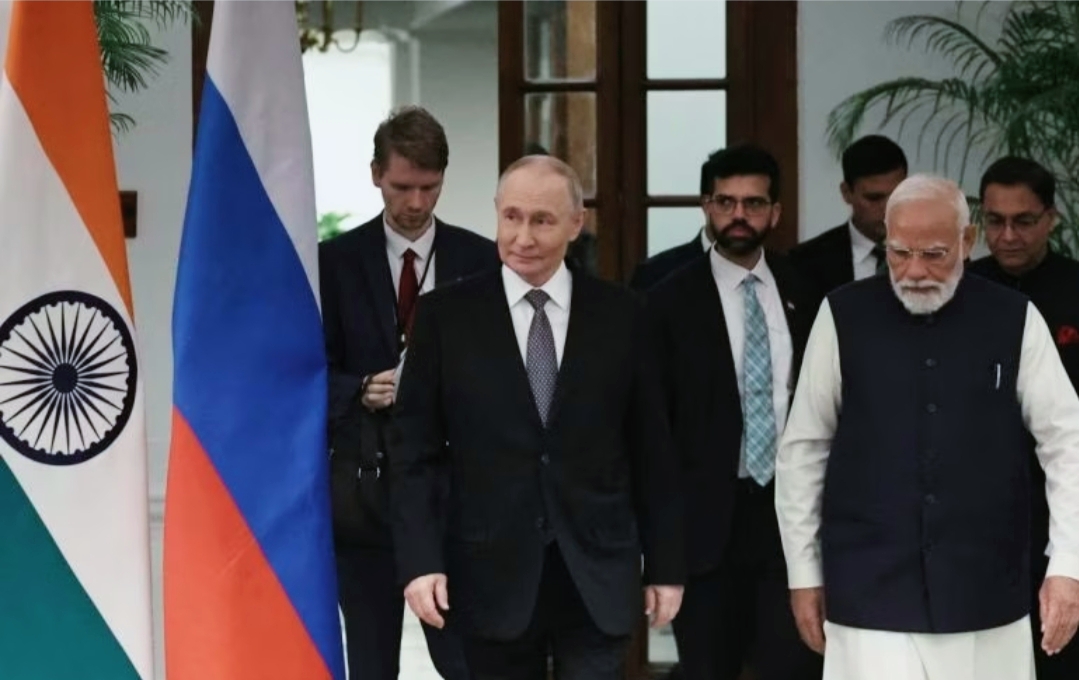
India and Russia have agreed to hold “regular bilateral consultations” on “Arctic-related issues” and expressed their satisfaction with the advancements in their multi-faceted cooperation regarding the Northern Sea Route, as stated in a joint declaration after the India-Russia summit on Friday (December 5, 2025).
India’s scientific interest in the Arctic goes back to before it became an independent nation, dating back to when the British Government signed the Svalbard Treaty in 1920.
This treaty granted Norway sovereignty over the Svalbard archipelago but also allowed citizens and companies from 48 signatory countries to have equal rights to engage in non-military, commercial, and scientific activities such as hunting, fishing, and mining, while banning military bases and fortifications.
In 2007, New Delhi initiated its first scientific expedition to the Arctic and set up Himadri, its inaugural Arctic outpost in Svalbard.
Indian scientists have been tracking the mass balance of Arctic glaciers and comparing them to those in the Himalayas.
Additionally, India has been actively participating in research related to Arctic oceanography, atmospheric studies, pollution, and microbiology.
Currently, over 25 institutes and universities in India are engaged in Arctic research.
The Arctic Council has 13 observer nations: France, Germany, Italy, Japan, the Netherlands, China, Poland, India, Singapore, South Korea, Spain, Switzerland, and the United Kingdom.
In 2014 and 2016, India launched its first multi-sensor moored observatory in Kongsfjorden and the northernmost atmospheric lab in Gruvebadet, Ny Alesund, both located in the Arctic region.
Up until 2022, India has successfully carried out thirteen expeditions to the Arctic.
With global warming speeding up the melting of polar ice, we can expect significant geological changes in the future that will open up new sea routes and present opportunities for minerals and metals.
India and Russia have also agreed to expand their cooperation in the nuclear energy sector, which includes support for the fuel cycle and life cycle to operate the Kudankulam nuclear power plant, as well as constructing the remaining nuclear power units at the site and setting timelines for equipment and fuel supplies.
Currently, two units with a capacity of 1,000 MW each are operational, while the other four units of the same capacity are under construction.
The full capacity of 6,000 MW at the Kudankulam site is anticipated to be reached by 2027.
The two countries also agreed to have “further discussions” regarding another nuclear plant, with India stating that it will “strive to” designate a second site in accordance with previously signed agreements.
Additionally, both nations agreed to speed up technical and commercial talks on the VVER (Vodo-Vodyanoi Energetichesky Reaktor) Russian nuclear reactors for design, research, and joint development of nuclear facilities.
Both countries also expressed their support for the “enhanced partnership” between the Indian Space Research Organisation and the Russian state-owned space corporation Roscosmos, focusing on the use of outer space for peaceful purposes.
- YouTube Relaunches Private Chats With Age Verification

- The Future Of Air Travel: Why The 100ml Liquid Limit May Soon Disappear

- Rising Temperatures, Rising Tempers? The Surprising Link Between Heat And Aggression

- India’s Lost Dragonfly Returns After 110 Years

- Snapchat Introduces Safer Story Sharing For Under-16 Users

- Google Launches Gemini 3.5 Live Translate

- The New Dating Trend Everyone’s Talking About: Puffer-Fishing

- Tea, Coffee, Juice: The Worst Empty Stomach Mistakes

- Instagram Introduces Profile Grid Customization

- Skywatchers Alert: Jupiter And Venus Set For A Rare Close Encounter Tonight

- Chrome Just Downloaded a 4GB AI Model? Here’s How to Delete It

- Why Does Real Love Feel Different Than We Expect?

- The 30-Minute Parenting Secret Every Child Needs

- Remote Robotics: Control Robotic Arms From Your Smartphone

- Mumbai’s Pod Taxis: Will BKC Benefit?

- Beyond The Missing Period: Understanding MRKH Syndrome

- Why Calling Every Stomach Problem ‘Gas’ Can Be Risky?

- Poke: Apple’s First AI Agent Debuts

- AC Drying Out Your Skin? Try This Simple Fix

- Want More Fireflies? Transform Your Garden Today

- Spotify Launches Podcast Clips For Instant Highlight Saving

- The Hidden Reason Summer Causes More Headaches

- Early Iron Deficiency Symptoms You Shouldn’t Ignore

- Meta Introduces Premium ‘Plus’ Tier For Instagram, Facebook And WhatsApp

- WhatsApp Launches Channel Status For 24-Hour Admin Updates

- 5 Powerful Signs You’re With The Right Person

- Social Media: The New Smoking For Children?

- Dewy, Glossy, Sweaty: The Viral Makeup Trend Everyone’s Trying

- Luna Launches Smart AI Band For Real-Time Daily Planning

- Meta Launches New ‘Forum’ App

- Why Is Your C-Section Scar Vertical?

- Red vs Orange Heat Alerts: Which One Puts Your Body At Greater Risk?

- Does AC Sleep Weaken Your Immunity? – Myth or Fact?

- The Rise Of Nonnamaxxing

- How To Clean Mushrooms Without Turning Them Soggy?

- How Hot Nights Quietly Harm Your Sleep And Heart?

- Indian Content Creators Can Win a Free Nepal Trip — Here’s How To Apply

- Gemini Omni Flash Brings Multimodal AI Video Creation To Google

- Essential Oil Diffusers: Healthy Trend or Hidden Hazard?

- Gmail Users Alert: Your Free 15 GB Storage Could Disappear

- YouTube Introduces Likeness Detection For 18+ Users

- AI vs Human Language: Is Learning Still Worth It?

- OpenAI Unveils ChatGPT Finance Tools With Direct Bank Integration

- The Ageing Risk Of Sleeping Too Much Or Too Little

- Fitness or Future Pain? The Truth About Joint-Damaging Workouts

- Salt Water Trend: What You Need To Know First?

- X Launches History Tab For Likes, Bookmarks And Videos

- Stay Chill: Smart Gadgets For Summer

- Instagram Launches Instant For Disappearing Photos

- ChatGPT App Now Supports Codex Coding Tool

- Best Smart Devices For Senior Citizens


Leave a Reply