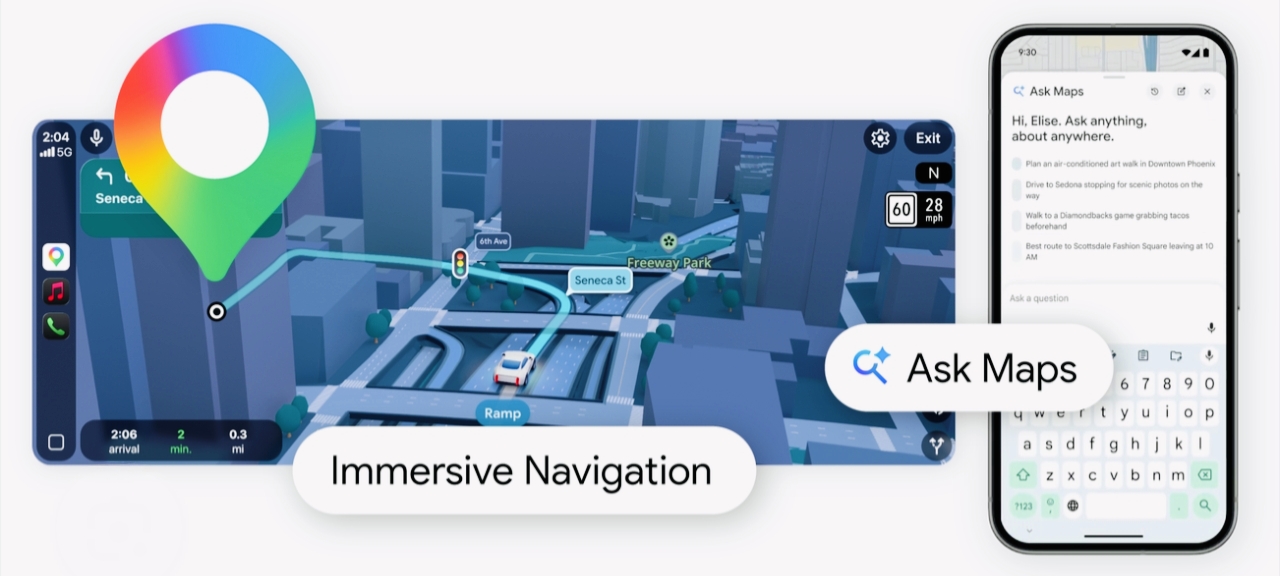
What if Google Maps could plan your entire trip like a human travel buddy?
Google has introduced a major upgrade to Google Maps with a new AI-powered feature called “Ask Maps”.
Built on its Gemini AI technology, this update transforms the app beyond basic navigation into a more intelligent and interactive assistant.
With “Ask Maps”, users can search for places in a more natural, conversational way.
The feature understands intent better and delivers results that feel more tailored and relevant, rather than just listing generic options.
Overall, this shift makes Google Maps more personalized and intuitive, helping people discover locations and plan their routes with greater ease and accuracy.
Natural, Personalized Search
The standout feature of “Ask Maps” is its ability to understand natural language, making searches feel more human and intuitive.
Instead of relying on short, basic keywords, users can now ask detailed and specific questions.
This allows for richer, more meaningful interactions within the app.
For example, users can request something like a quiet cafe with good reviews and outdoor seating, rather than a generic search.
As a result, the app delivers more tailored and context-aware recommendations.
Context-Aware, Smarter Results
The new chatty interface marks a major shift from traditional keyword-based searches.
Gemini AI understands both context and user intent, making interactions more meaningful.
It delivers results that are not just relevant but also aligned with user preferences.
Also Read | WhatsApp’s 15‑Minute Auto‑Delete Feature: Everything You Should Know
The feature combines insights from reviews, ratings, photos, and business details.
This helps users quickly explore well-rounded options and make informed decisions with ease.
AI Integration
Google Maps is following this shift by embedding AI directly into its core features.
The goal is to simplify how users plan outings, trips, and daily travel.
It reduces the need to switch between multiple apps for information.
Overall, the update enhances convenience by bringing everything into one place.
Smart Trip Planning & Quick Insights
Ask Maps enhances travel planning by providing hotels, restaurants, attractions, and routes in one place, simplifying the process and reducing repeated searches.
Users can now ask for trip ideas like “things to do” or “hidden gems,” and receive curated lists with details, ratings, and directions, making planning easier.
Google Maps also summarizes reviews, highlighting key points like ambiance, service, and popular dishes.
These features help users save time and make quicker, more informed decisions.
Personalized AI With Data Accuracy
One key advantage of this feature is its ability to deliver highly tailored recommendations.
The AI studies user behavior and preferences to refine its suggestions over time.
This helps ensure that the results become more accurate and relevant with continued use.
As a result, users receive recommendations that better match their individual needs.
This personalization can significantly improve overall user engagement and satisfaction.
It is especially useful for people who rely on Maps for daily navigation and exploration.
However, experts highlight the importance of maintaining accurate and reliable data.
Since users depend on these suggestions for real-world decisions, errors or outdated information can impact their experience.
Therefore, keeping data updated and verified will be crucial for the long-term success of these AI-driven features.
Future Of Conversational AI
The launch of “Ask Maps” highlights the growing importance of conversational AI in modern digital interfaces.
It reflects a shift toward more natural, human-like interactions with technology.
Users are becoming more comfortable engaging with apps through conversational input.
Platforms that adapt to this behavior are likely to gain a competitive advantage.
The feature is currently being rolled out gradually to users.
It is expected to become widely available over the coming months.
Google will likely continue improving it based on user feedback and real-world usage.
AI-Powered Navigation Assistant
The integration of Gemini AI into Google Maps represents a major advancement in digital navigation.
It introduces a more conversational way for users to interact with the platform.
Search becomes more intuitive, allowing natural language queries instead of rigid keywords.
The system better understands context and user intent.
This leads to more relevant and personalized results.
Google Maps is evolving beyond a simple navigation tool.
It is becoming a smart assistant for everyday needs.
Users can rely on it for both navigation and decision-making support.
The overall experience becomes smoother and more efficient.
This marks a significant step forward in how people use digital mapping services.
Smarter Travel With AI
The goal is to transform Google Maps into more than just a basic tool.
It is being designed as a comprehensive assistant that anticipates user needs.
This shift focuses on making the experience more proactive and intelligent.
Gemini AI plays a key role in enabling these advanced capabilities. It allows users to interact through natural, conversational inputs.
The system better understands context and delivers more relevant results.
Personalized recommendations further enhance the overall experience.
Google Maps is evolving beyond simple point-to-point navigation.
It now supports users throughout their entire journey with smarter assistance.
This marks a significant step forward in redefining how digital navigation works. What does this mean for the future of navigation apps?


Leave a Reply