One of the significant achievements of the scientific community is the creation of space telescopes. These telescopes orbit above the Earth’s atmosphere, allowing us to closely observe the Universe (planets, stars, galaxies) with remarkable clarity.
These telescopes hold a significant edge over ground-based ones because they can tap into a broader range of the electromagnetic spectrum. This allows them to pick up on light wavelengths like X-rays, gamma rays, and infrared, which are usually absorbed or bounced back by the Earth’s atmosphere, according to Las Cumbres Observatory.
The very first space telescope, known as the Orbiting Astronomical Observatory 2 (OAO-2), was sent into low Earth orbit in 1968 on an Atlas-Centaur rocket, according to the National Space Centre. For the next four years after it was launched, the OAO-2 transmitted data back to scientists on Earth, which included the initial observations of astronomical objects in ultraviolet light.
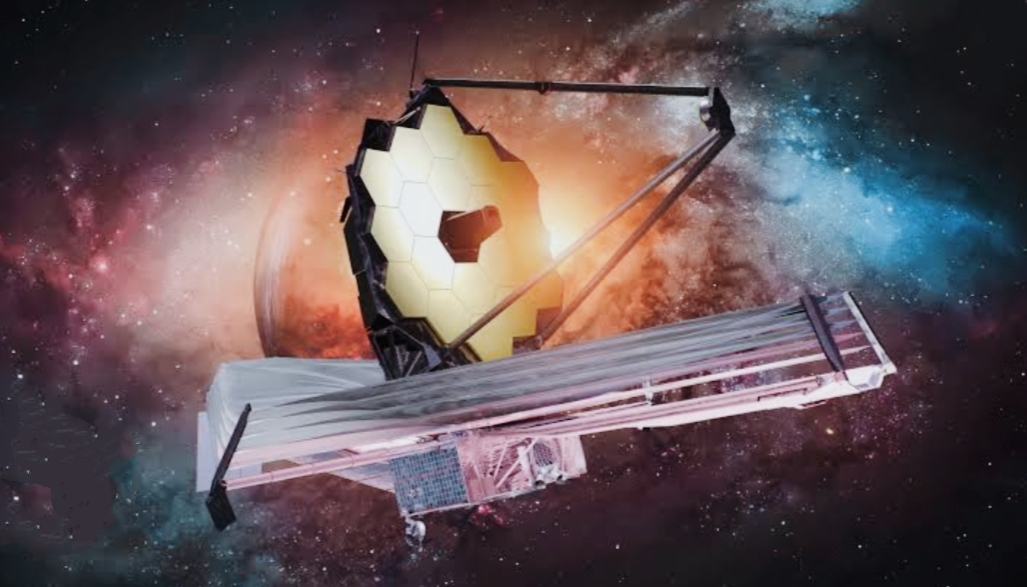
James Webb Space Telescope
Introduced in 2021, the James Webb Space Telescope is recognized by NASA as the biggest and most powerful observatory out there.
One of the key missions of the Webb telescopes is to explore every stage in the history of our Universe. This journey spans from the initial bright flashes after the Big Bang, through the creation of solar systems that can host life on planets like Earth, all the way to the development of our own Solar System, according to NASA.
The Space Administration has dubbed the Webb the “premier observatory of the next decade”. This telescope examines the universe in infrared with its super-sensitive tools. The organizations managing the JWST include NASA, the European Space Agency (ESA), and the Canadian Space Agency (CSA).
Hubble Space Telescope
Since its launch in April 1990, the Hubble Space Telescope has stood as a symbol of the groundbreaking scientific tools that have advanced our knowledge through incredible discoveries.
Its design, technology, and ease of maintenance have made it one of NASA’s most groundbreaking observatories, according to NASA’s website, which praises the telescope’s accomplishments. From figuring out the atmospheric makeup of planets orbiting other stars to uncovering dark energy, Hubble has revolutionized our understanding of the universe, the site noted.
Managed by NASA and ESA, the Hubble telescope observes the universe in ultraviolet, visible, and near-infrared light from low Earth orbit.
Chandra X-ray Observatory
Launched in 1999, the Chandra X-ray Observatory is NASA’s leading mission for X-ray astronomy. It picks up X-ray emissions from extremely hot areas of the universe, like exploded stars, galaxy clusters, and matter surrounding black holes, according to the website.
Operated exclusively by NASA, it’s described as the most powerful X-ray telescope, boasting eight times the resolution of any previous X-ray telescope and capable of detecting sources over 20 times fainter.
Planck Space Observatory
Planck was the first mission by ESA aimed at exploring the Cosmic Microwave Background (CMB), which is the leftover radiation from the Big Bang that happened around 14 billion years ago.
Launched in 2009, Planck was able to measure temperature fluctuations in the microwave background with far greater sensitivity, angular resolution, and frequency range than any earlier satellite, offering astronomers a unique glimpse into our Universe when it was just a mere 300,000 years old.
Planck operated flawlessly for 30 months, successfully completing five full-sky surveys using both of its instruments. The Low Frequency Instrument (LFI), which could function at slightly higher temperatures than HFI, continued to scan the sky for a significant portion of 2013, yielding additional data to enhance the final results of Planck, before it was switched off later that year, according to the ESA website.
Spitzer Space Telescope
Started in 2003, the Spitzer Space Telescope marked the last mission in NASA’s Great Observatories Program. A collection of four space-based observatories, each capturing the Universe in a unique type of light, according to Caltech’s Cosmos website.
Even though Spitzer was retired in 2020, it still holds a significant place in astronomy as it enabled scientists to explore cosmic areas that were obscured when viewed through optical telescopes.
Managed by NASA, its infrared observations captured dusty star-forming regions, galactic centers, and light from incredibly distant galaxies at the Universe’s edge.
- FIFA World Cup 2026: How Fans Can Watch Matches For Free

- YouTube Relaunches Private Chats With Age Verification

- The Future Of Air Travel: Why The 100ml Liquid Limit May Soon Disappear

- Rising Temperatures, Rising Tempers? The Surprising Link Between Heat And Aggression

- India’s Lost Dragonfly Returns After 110 Years

- Snapchat Introduces Safer Story Sharing For Under-16 Users

- Google Launches Gemini 3.5 Live Translate

- The New Dating Trend Everyone’s Talking About: Puffer-Fishing

- Tea, Coffee, Juice: The Worst Empty Stomach Mistakes

- Instagram Introduces Profile Grid Customization

- Skywatchers Alert: Jupiter And Venus Set For A Rare Close Encounter Tonight

- Chrome Just Downloaded a 4GB AI Model? Here’s How to Delete It

- Why Does Real Love Feel Different Than We Expect?

- The 30-Minute Parenting Secret Every Child Needs

- Remote Robotics: Control Robotic Arms From Your Smartphone

- Mumbai’s Pod Taxis: Will BKC Benefit?

- Beyond The Missing Period: Understanding MRKH Syndrome

- Why Calling Every Stomach Problem ‘Gas’ Can Be Risky?

- Poke: Apple’s First AI Agent Debuts

- AC Drying Out Your Skin? Try This Simple Fix

- Want More Fireflies? Transform Your Garden Today

- Spotify Launches Podcast Clips For Instant Highlight Saving

- The Hidden Reason Summer Causes More Headaches

- Early Iron Deficiency Symptoms You Shouldn’t Ignore

- Meta Introduces Premium ‘Plus’ Tier For Instagram, Facebook And WhatsApp

- WhatsApp Launches Channel Status For 24-Hour Admin Updates

- 5 Powerful Signs You’re With The Right Person

- Social Media: The New Smoking For Children?

- Dewy, Glossy, Sweaty: The Viral Makeup Trend Everyone’s Trying

- Luna Launches Smart AI Band For Real-Time Daily Planning

- Meta Launches New ‘Forum’ App

- Why Is Your C-Section Scar Vertical?

- Red vs Orange Heat Alerts: Which One Puts Your Body At Greater Risk?

- Does AC Sleep Weaken Your Immunity? – Myth or Fact?

- The Rise Of Nonnamaxxing

- How To Clean Mushrooms Without Turning Them Soggy?

- How Hot Nights Quietly Harm Your Sleep And Heart?

- Indian Content Creators Can Win a Free Nepal Trip — Here’s How To Apply

- Gemini Omni Flash Brings Multimodal AI Video Creation To Google

- Essential Oil Diffusers: Healthy Trend or Hidden Hazard?

- Gmail Users Alert: Your Free 15 GB Storage Could Disappear

- YouTube Introduces Likeness Detection For 18+ Users

- AI vs Human Language: Is Learning Still Worth It?

- OpenAI Unveils ChatGPT Finance Tools With Direct Bank Integration

- The Ageing Risk Of Sleeping Too Much Or Too Little

- Fitness or Future Pain? The Truth About Joint-Damaging Workouts

- Salt Water Trend: What You Need To Know First?

- X Launches History Tab For Likes, Bookmarks And Videos

- Stay Chill: Smart Gadgets For Summer

- Instagram Launches Instant For Disappearing Photos

- ChatGPT App Now Supports Codex Coding Tool

- Best Smart Devices For Senior Citizens

- Why Did Humans Use To Eat Soil, And Why Do Some Still Do?

- How Your Body Responds To Sleep Deprivation

- Glow Naturally: Simple Habits For Healthier Skin

- Google Chrome Too Messy? Easy Tricks For Smoother Browsing

- Faustino Oro Becomes Chess’s Second-Youngest Grandmaster

- The World’s First Railway: Where It Began?

- Google Upgrades Cars With Gemini AI

- The Hidden Warning On Your Skin: Early Signs Of Diabetic Rash

- Amazon Launches Vertical Feed For Prime Video

- Say Goodbye To Mosquitoes Naturally With These 6 Plants

- Puffy Face? Simple Ways To De-Puff Your Face

- Google Launches Fitbit Air: A New Era In Sleep And Recovery Tracking Begins

- Planning A Trip To Rudranath Temple? Here’s The Complete Reopening Guide

- Japan’s Simple Secrets To Heart Health

- Ube Coffee: Trendy Treat or Overhyped Drink?

- Don’t Ignore These AC Warning Signs

- Thinking About Them Nonstop? The Rise Of Limerence

- The Rise Of The ‘Ick’ In Modern Dating

- Step By Step: The Simple Habit That Lowers Blood Pressure Fast

- Galaxy AI Glasses Official, Samsung Teases Earbuds Upgrade

- What Rice Water Really Does To Your Skin Overnight?

- Robots At The Gate: Tokyo’s Bold Airport Experiment

- 5AM Routine: Start Your Day With Gentle Habits


Leave a Reply