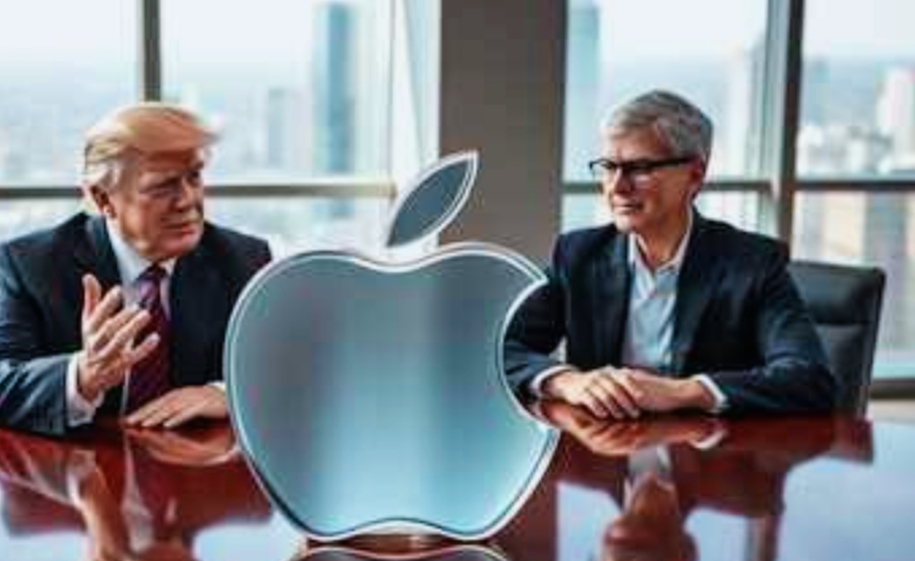
Apple’s decision to manufacture in India appears to have angered President Donald Trump. According to US President Donald Trump, Apple is allowed to establish factories in India, but if its products are made abroad, they will be subject to a 25% duty on US-sold goods. During the signing of executive orders on nuclear energy in the White House Oval Office, Trump mentioned a conversation he had with Tim Cook, the CEO of Apple, saying, “I had an understanding with Tim that he wouldn’t be doing this”. He declared his intention to develop plants in India. “That’s fine”, I replied, “but you won’t sell here without tariffs”.
“We’re talking about the iPhone,” Trump emphasized. I would prefer that it be constructed in the US if it were to be sold there. After first focusing on Apple, he later expanded the tariff threat to include Samsung, Huawei, and all other smartphone manufacturers, stating, “If not, it wouldn’t be fair for anyone to produce that thing”. By the end of June 2025, the tariffs are expected to go into effect.

Trump redoubled his efforts earlier that day in a social media post, writing,”Instead of being made in India or somewhere else, I anticipate that the iPhones that will be offered in the US will be made and constructed in the US. If that isn’t the case, Apple will have to pay the US a minimum 25% tariff. Priority is given to American jobs”.
During a recent visit to Doha, Trump urged Cook to concentrate on manufacturing in the United States, pointing out that India’s elevated tariffs create challenges for American businesses. He remarked, “They have proposed a deal in which they would impose no tariffs on us, but I informed Tim, ‘I do not wish for you to establish operations in India. Please build here’”.Trump emphasized that India’s tariff regulations, which are among the highest in the world, hinder market entry, yet he remained firm on the importance of domestic production.
During Apple’s Q2 2025 earnings call, Tim Cook, the company’s CEO, discussed tariffs and pointed out that they depend on where the product is manufactured. Experts in the field warn that moving iPhone manufacturing to the US will result in significant cost increases because of increased labor and operating costs. Apple may affect demand if it raises iPhone prices to $3,000 or higher by passing these expenses on to customers in order to preserve profit margins. Considering the intricate worldwide network that Apple now depends on, mostly in Asia, analysts also note that creating a US-based supply chain would take a substantial amount of time and money.
There is disagreement about the idea; proponents contend that tariffs might increase manufacturing jobs in the United States, while critics warn that they could increase consumer costs and interfere with international trade. The tariffs’ implementation and any exclusions for businesses investing in US facilities have not yet been made clear by the White House.
- Canine Distemper Virus Treatment In Dogs
- Corona Virus(COVID-19)
- INDIAN SONG AGAIN CREATES HISTORY IN OSCAR 2023 – BEST ORIGINAL SONG NATTU NATTU
- OSCAR 2023 : THE FIRST INDIAN FILM WINS BEST DOCUMENTARY SHORT FILM
- Ravindra Jadeja Says Anything for Mahi Bhai!!!CSK Fans sings Mannipayya!!CSK wins Fifth IPL Title!
- Ravindra Jadeja Says Anything for Mahi Bhai!!!CSK Fans sings Mannipayya!!CSK wins Fifth IPL Title!
- Chandrayaan 3 India Mission – Tik Tik Crucial 15 minutes!!!
- In the India-Pakistan War, Andhra Soldier Murali Nayak Lost His Life.
- About Monkeypox | Symptoms| Transmission | Treatment
- The PM of Buzdil is unable to articulate Modi’s name: In a scathing speech, A Pakistani MP attacks Shehbaz Sharif and reveals the army-backed coalition
- Lance Naik Dinesh Kumar arrive in Haryana village during Pakistan bombardment in Poonch; the martyr’s father declares, “Two more sons are still serving the nation.”
- Which Female Officers oversaw the “Operation Sindoor” media briefing?
- PAKISTAN DIALED INDIA – Go Back To Fighting or Peace
- WHAT ON EARTH JUST TOOK PLACE
- What Does India and Pakistan’s Ceasefire Agreement Mean


Leave a Reply